
Featured Commercial PA & Pro-Audio Lineup
Explore engineered portable public address systems, wireless DSP acoustic interfaces, and professional sound reinforcement units available for global enterprise distribution.
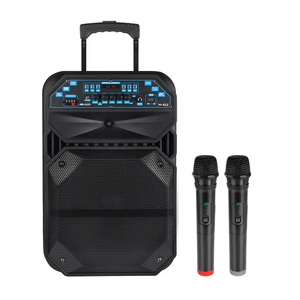
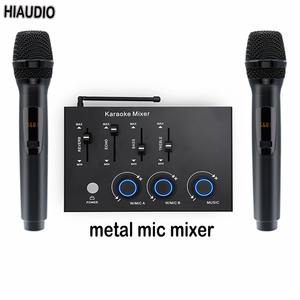
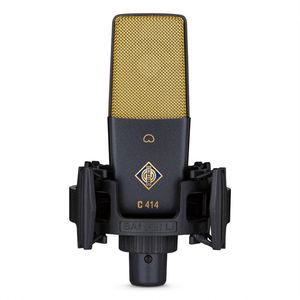
1. Enterprise Sourcing & Architectural Acoustics of Portable PA Systems
In the contemporary landscape of public address (PA) electronics, the modern portable PA system has evolved far beyond basic megaphone functionality. Today’s commercial deployment demands sophisticated acoustic transducer engineering, real-time Digital Signal Processing (DSP), multi-channel UHF phase-locked loop (PLL) wireless stability, and intelligent power topology. As a tier-one trusted portable PA system manufacturer & supplier, our engineering paradigm synthesizes high Sound Pressure Level (SPL) acoustic output with portable ergonomics to fulfill stringent B2B procurement standards across global markets.
Whether servicing municipal outdoor gatherings, corporate educational summits, fitness training centers, or commercial pop-up retail, professional sound reinforcement requires uncompromised speech intelligibility and dynamic acoustic bandwidth. Electro-acoustic integration requires precision-matched compression drivers, high-excursion woofers, and custom waveguide geometries designed to project consistent 90° x 60° dispersion patterns without polar frequency lobing.
Proprietary XBass™ Tuning
Algorithmic psychoacoustic bass extension that dynamically boosts low frequencies without over-excursion or thermal compression of the driver voice coil.
RunStretch™ Power Control
Adaptive buck-boost switching regulator architecture balancing rail voltage against instantaneous signal peaks to extend battery longevity by up to 40%.
Personalized Audiodo™ DSP
Integrated hearing-curve calibration enabling hardware-level equalization customization for specialized acoustic environments and vocal profiles.
2. Future Procurement Trends in Portable Audio Sourcing (2025–2030)
Strategic B2B procurement officers and audio-visual distributors are experiencing a structural shift in buyer expectations. Sourcing criteria have transitioned from legacy analog amplifiers to intelligent, cloud-manageable, and highly resilient wireless sound systems. Key technological trajectories shaping future procurement include:
A. UHF Spectrum Flexibility & Bluetooth 6.0 LE Audio Integration
As international telecom regulatory authorities modify available RF frequency bands, multi-frequency UHF systems incorporating auto-scan frequency synthesis and phase-locked loop (PLL) circuitry are critical to mitigate RF intermodulation. Concurrently, integration of low-latency Bluetooth 6.0 with LC3 codec technology allows multi-speaker broadcast topology (Auracast™), permitting single-source audio distribution to hundreds of client PA nodes without physical interconnect cabling.
B. Battery Chemistry & Next-Gen Power Densities
Legacy lead-acid and standard NMC Lithium-ion packs are systematically replaced by high-density Lithium Iron Phosphate (LiFePO4) chemistry. LiFePO4 cells offer 3,000+ charge cycles, operational safety across temperature extremes (-20°C to 65°C), and non-combustible thermal runaway immunity—essential for long-term rental fleets and municipal deployments.
C. Modular Hardware Ecosystems & OEM/ODM Customization
Distributors increasingly demand modular chassis architecture where dual-channel wireless microphone receivers, optical ARC mixers, DSP delay units, and high-power wireless expansion modules can be field-swapped. Our factory OEM lines facilitate custom fascia tooling, private-label firmware programming, and custom parametric EQ preset flashing prior to shipment.
3. Enterprise Manufacturing Standards & Quality Control Protocols
As a leading original equipment manufacturer (OEM) and original design manufacturer (ODM), our production infrastructure adheres to rigorous ISO9001, ISO14001, and BSCI auditing frameworks. Understanding that field reliability directly impacts brand equity for our B2B partners, our factory facilities incorporate automated surface-mount technology (SMT), acoustic anechoic measurement chambers, and environmental stress screening (ESS).
Strict Acoustic & Reliability QA Pipeline
Every portable PA system batch undergoes standardized testing protocols before receiving dispatch clearance:
- Full-Spectrum Anechoic Testing: Audio Precision (APx555) analysis for frequency response linearity (+/- 1.5dB), total harmonic distortion (THD), and rub-and-buzz transducer detection.
- Environmental Stress Testing: IP68 immersion testing, salt-spray corrosion resistance for outdoor metallic hardware, and thermal shock cycling from -30°C to 75°C.
- Vibration & Drop Compliance: ISTA-3A package drop simulations and 3-axis sinusoidal vibration testing simulating hostile logistics transport.
- Electromagnetic Compatibility (EMC): Full CE-EMC, FCC Part 15/17, and RED compliance to guarantee zero radio frequency interference in dense wireless environments.
4. Frequently Asked Questions (FAQ) for Sourcing & Procurement
Below are technical and commercial responses to common inquiries raised by enterprise audio buyers, AV integrators, and international distributors during product qualification.
What minimum order quantities (MOQ) and lead times apply for custom OEM/ODM PA system projects?
For standard catalog configurations with custom logo screen-printing and retail packaging, our baseline MOQ starts at 200 units with a 15-day manufacturing lead time. For full-custom enclosure tooling, custom PCB engineering, and proprietary DSP firmware development, initial pilot runs require 1,000 units with a 45-to-60 day NPI (New Product Introduction) timeline.
How do your portable PA systems maintain acoustic clarity at maximum amplifier output?
Our engineering utilizes multi-band dynamic range compression (DRC) and peak-limiting algorithms running on dedicated 32-bit floating-point DSP chips. By continuously monitoring driver voice coil temperature and excursion thresholds, the system dynamically prevents clipping distortion while maintaining maximum achievable acoustic SPL.
What wireless microphone frequencies are supported for global regulatory compliance?
We manufacture wireless microphone modules across multiple frequency bands: UHF band (470 MHz - 960 MHz) with selectable PLL channels tailored for North American FCC, European ETSI, and Asian spectrum allocations; 2.4GHz digital frequency-hopping spread spectrum (FHSS); and emerging 5.8GHz channels for congested RF venues.
Are replacement parts, battery modules, and schematic documentation available for repair centers?
Yes. As a B2B-focused manufacturer, we provide comprehensive service kits including modular amplifier PCBs, replacement lithium battery assemblies, driver diaphragms, and component-level schematic documentation to authorized regional service hubs.
Can your portable PA systems operate while charging under heavy AC load?
All units incorporate dual-rail power supply architecture with intelligent pass-through power management. The AC charger can simultaneously top off the battery bank and supply uninterrupted current to the Class-D power stage without thermal throttling or ground-loop hum.