
Featured Wireless Lavalier Microphone Portfolio
Explore our tier-1 export range of lapel and lavalier wireless systems. Engineered with advanced DSP noise cancelling algorithms, dynamic power buck-boost circuits, and universal plug-and-play mobile compatibility for global OEM/ODM distributors.
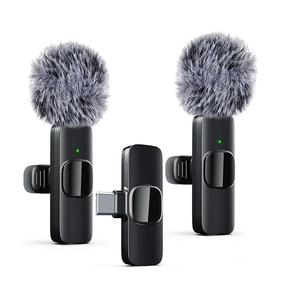
Portable Gooseneck Microphone Lapel Microphone Wireless Lavalier For iPhone iPad Video Recording Interviews Video Podcasts
Contact Us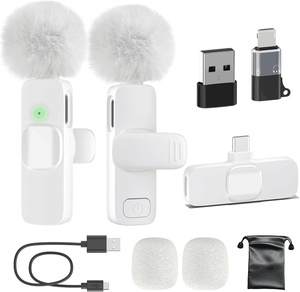
Professional Wireless Mini Microphone For iPhone Android For Lavalier Lapel Microphone For Video Recording YouTube
Contact Us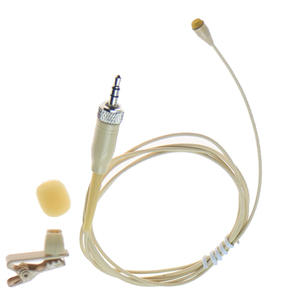
D4060 Mini Tie Clip Perfect Original Lavalier Lapel Microphone EW G2 G3 G4 SVX Wireless BodyPack Transmitter 3.5mm Jack Lock
Contact Us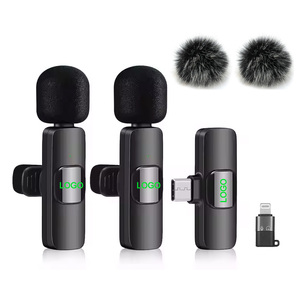
K9 Wireless Professional Condenser Lavalier Handheld Microphone Lapel Mic Outdoor Live Stream Recording TikTok Intelligent Noise
Contact Us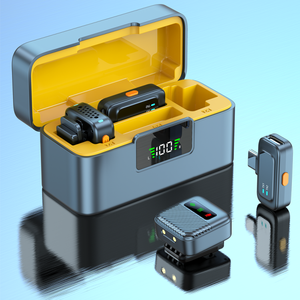
Wireless Noise Cancelling Omni-directional Lavalier Lapel Microphone for Live Streaming Vlogging Video Recording Compatible
Contact Us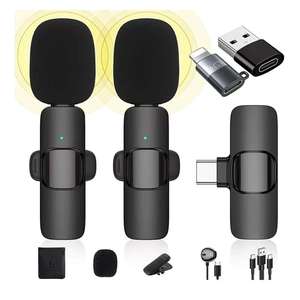
K9 Wireless Lavalier Microphone-Noise Cancelling Professional Lightweight 20Hz-20kHz Frequency Response For Live Streaming
Contact Us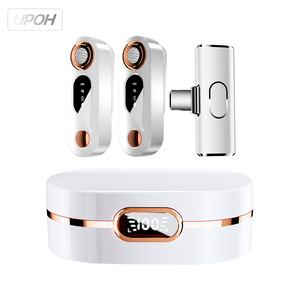
Factory Direct Sale Lavalier Wireless Microphone Universal Microphone with Charging Station and Display
Contact Us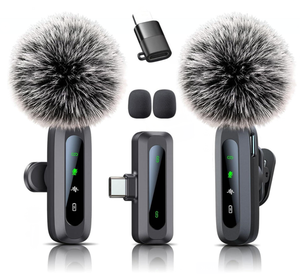
J3 Mini Wireless Lavalier Microphone Auto Pairing Mute Noise Reduction For iPhone Android-Type C Connector Wireless Clip
Contact UsTechnological Evolution & Future Industry Trends in Wireless Lavalier Microphones
The global market for compact wireless audio systems is experiencing a paradigm shift driven by creator-economy demands, high-definition streaming, and advancements in miniaturized electroacoustic engineering. China’s manufacturing hubs in Shenzhen and Dongguan lead this revolution through rapid hardware-software convergence.
1. The Shift to 2.4GHz GFSK Architecture and LC3/BLE Audio Codecs
Historically, professional lavalier microphones relied heavily on traditional UHF (Ultra High Frequency) and VHF radio bands to preserve audio fidelity. However, regulatory spectrum fragmentation across the EU, US, and Asia has pushed Tier-1 Chinese manufacturers toward globally license-free 2.4GHz ISM digital transmission protocols utilizing Gaussian Frequency Shift Keying (GFSK).
With the integration of Bluetooth 5.4 and LC3 (Low Complexity Communication Codec) technology, modern 2.4GHz lavalier systems achieve uncompressed 24-bit/48kHz transmission with glass-to-glass latencies dropping below 5 milliseconds. Advanced frequency-hopping spread spectrum (FHSS) algorithms scan the RF environment 1,000 times per second, dynamically evading Wi-Fi and Bluetooth interference in dense urban environments.
2. Deep Neural Network (DNN) AI Noise Reduction vs. Traditional Hardware AGC
Conventional lavalier systems relied on analog gain control and high-pass filtering (75Hz/150Hz low-cut) to suppress ambient background noise. Today, leading Chinese audio exporters incorporate dedicated Neural Processing Units (NPUs) or specialized DSP chipsets running real-time Deep Neural Network noise suppression algorithms.
- Acoustic Model Training: AI models trained on over 100,000 environmental noise profiles (traffic, HVAC rumble, wind, crowded cafes) isolate vocal acoustic formants while preserving timber naturalness.
- Real-time Voice/Noise Separation: AI noise reduction achieves up to 35dB of active background attenuation without introducing spatial phase distortion or vocal clipping.
- Multi-Level Gain Staging: Intelligent auto-gain adjustment maintains consistent -12dBFS peak levels regardless of speaker distance or vocal loudness dynamics.
3. Miniaturization: MEMS Capsules vs. Back-Electret Condenser Microphones
The race toward invisible, lightweight wearable audio has forced micro-acoustic restructuring. Traditional 6mm back-electret condenser capsules are increasingly complemented by high-performance Micro-Electro-Mechanical Systems (MEMS) acoustic sensors. MEMS microphones offer exceptional phase matching for dual-capsule beamforming arrays, ultra-low power consumption, and superior immunity to mechanical vibration and electromagnetic interference (EMI).
32-Bit Float On-Board Recording
Next-generation OEM lavaliers integrate internal micro-SD or eMMC flash memory capable of recording dual 32-bit float backup tracks. This completely eliminates digital clipping and audio distortion at extreme SPL levels.
Smart Charging Case Ecosystems
Integrated charging cases featuring high-density Lithium-polymer cells provide up to 48 hours of extended operational runtime, automated magnetic pairing, and instantaneous USB-C/Lightning OTG digital audio pass-through.
Universal Protocol Auto-Sensing
Modular receivers automatically sense analog 3.5mm TRS/TRRS connections vs. USB-C Audio Class (UAC) / iOS Lightning digital audio interfaces, eliminating the need for external adapter dongles.
Global B2B Procurement Trends & Sourcing Strategies (2026–2030)
For international brand owners, audio wholesalers, and retail distributors, sourcing lavalier microphones from Chinese manufacturers requires navigating shifting compliance frameworks, supply chain optimization, and private-label customization demands.
Key Drivers Reshaping Audio Sourcing & OEM Vendor Selection
1. Direct Digital Plug-and-Play Integration for Mobile Ecosystems
With global smartphone manufacturers standardizing on USB Type-C and wireless protocol bridges, global buyers are pivoting away from standalone 3.5mm analog receivers toward multi-rx dongle configurations. Modern sourcing specifications mandate multi-device compatibility: a single receiver unit must seamlessly output digital audio to Android, iOS, Windows, macOS, and mirrorless cameras without latency loss.
2. Modular Private-Labeling & Rapid Prototyping Capabilities
Leading Chinese audio exporters are no longer just contract assembly plants; they function as full-stack acoustic R&D partners. B2B buyers now demand modular hardware platforms where outer industrial housing, capacitive touch displays, RGB lighting indicators, and firmware UI can be tailored within 25–30 days from 3D CAD approval.
3. Supply Chain Traceability, Regulatory Compliance & ESG Standards
Exporting pro-audio electronics into North America, Europe, and Japan mandates strict adherence to international regulatory standards. Top China lavalier microphone manufacturers maintain complete supply chain transparency, providing verified compliance documentation:
- Radio Frequency Standards: FCC Part 15 (USA), CE RED 2014/53/EU (Europe), TELEC / MIC (Japan), SRRC (China).
- Environmental & Safety: RoHS 2.0, REACH SVHC, WEEE Directive, UN38.3 Lithium Battery Safety Transport Certification.
- Social Responsibility: ISO 9001:2015 Quality Management Systems and BSCI / SMETA audited manufacturing facilities.
| Evaluation Parameter | Tier-1 OEM Manufacturing Standard | Generic / Low-Cost Sourcing Standard |
|---|---|---|
| Acoustic Frequency Response | 20Hz – 20kHz (±1.5dB broadcast curve) | 100Hz – 10kHz (heavy high-end roll-off) |
| Signal-to-Noise Ratio (SNR) | > 80 dB (A-weighted @ 1kHz, 1Pa) | < 60 dB (noticeable background hiss) |
| RF Transmission Protocol | 2.4GHz FHSS with Adaptive Channel Selection | Fixed Single-Channel 2.4GHz / Analog UHF |
| Battery Cell Certification | IEC 62133 / UL 1642 Certified Cells with BMS protection | Uncertified Lithium-ion pouch batteries |
| RF Latency Speed | Ultra-low < 9ms (digital end-to-end) | High latency > 25ms (audio lip-sync delay) |
Our Manufacturing Superiority & Electroacoustic Engineering Infrastructure
Rooted in years of relentless innovation and acoustic research, our production facilities combine precision SMT automation, rigorous quality control, and proprietary audio algorithms to empower global pro-audio brands.
Fully Anechoic Testing Chambers
Our acoustic R&D center features standardized fully anechoic chambers equipped with Audio Precision APx555 audio analyzers and Neumann reference microphones, guaranteeing precise frequency curve calibration for every batch.
Proprietary DSP & Acoustic Tuning
Leveraging self-developed audio enhancement algorithms—such as dynamic power buck-boost circuitry and adaptive low-end voice clarity algorithms—our microphones achieve rich, natural vocal reproduction across all dynamic ranges.
High-Speed SMT & 100% AOI Inspection
High-precision SMT surface mount assembly lines paired with Automated Optical Inspection (AOI) and wireless RF spectrum analyzers ensure zero component defects and robust solder joint integrity on every PCB layout.
Frequently Asked Questions (B2B Procurement Guide)
Essential technical and commercial insights for international importers, brand owners, and procurement executives sourcing wireless lavalier microphones from China.