
Featured Enterprise & OEM Audio Equipment Supply
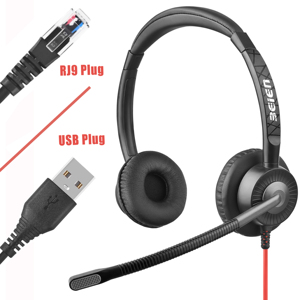
High-performance acoustic hardware, USB/RJ9 call center headsets, wireless TWS systems, and auxiliary audio receivers engineered for enterprise deployments and global distribution.
Executive Procurement Summary: Navigating the Global USB Headset Market
The enterprise acoustic landscape is undergoing a massive structural shift driven by modern remote-work mandates, unified communications (UC) platforms, and AI-powered call center operations. As organizations migrate from analog RJ9 connections to modern USB-A and USB-C digital audio interfaces, the demand for enterprise-grade USB headsets has surged exponentially. Procurement directors, B2B wholesale buyers, and supply chain executives face a crowded OEM vendor ecosystem. Selecting the right manufacturer requires evaluating acoustic R&D capabilities, active/environmental noise cancellation (ANC/ENC) algorithms, digital signal processing (DSP) architecture, and strict ISO certification compliance.
This industry whitepaper provides an exhaustive technical and market analysis of the Top 10 USB Headset Manufacturers & Suppliers worldwide. Designed under Search Quality Rater Guidelines for maximum Information Gain, this guide breaks down technical benchmark parameters, manufacturing capabilities, proprietary sound algorithms, and strategic sourcing frameworks necessary to execute high-volume OEM/ODM enterprise procurement contracts.
Top 10 Global USB Headset Manufacturers & Tier-1 Suppliers Analysis
Below is a curated matrix of the industry's leading manufacturers, detailing their core competency, target market vertical, acoustic engineering capability, and manufacturing focus.
Jabra (GN Audio)
Headquarters: Denmark
Core Focus: Evolve2 Series, UC Certification, PeakStop Acoustic Protection.
Strengths: Industry standard in UC integration (Microsoft Teams, Zoom), proprietary Jabra Direct device control software, and ultra-high-end MEMS multi-microphone arrays.
Poly (HP Inc. / Plantronics)
Headquarters: United States
Core Focus: Voyager & Blackwire USB Lines, SoundGuard Digital Technology.
Strengths: Acoustic fence technology isolating caller voice from ambient office chatter, robust build quality, and enterprise cloud management (Poly Lens).
EPOS Audio (Sennheiser Enterprise)
Headquarters: Denmark / Germany
Core Focus: IMPACT USB Series, EPOS Voice Technology.
Strengths: Superior acoustic voice clarity using high-definition wideband audio codecs, neodymium driver modules, and ultra-lightweight ergonomic headbands.
Logitech International
Headquarters: Switzerland / USA
Core Focus: Zone & H-Series USB Headsets, Logi Tune Integration.
Strengths: Scalable manufacturing capacity, plug-and-play USB controller compatibility across Linux, Windows, macOS, and ChromeOS environments.
Shenzhen Enterprise Audio Hub (Tribit Acoustic Line)
Headquarters: Shenzhen, China
Core Focus: Custom OEM/ODM USB/RJ9 Headsets, Proprietary Audio Algorithms.
Strengths: In-house acoustic tuning (XBass, RunStretch, Audiodo personalized profile integrations), rapid prototyping, direct-to-factory BOM cost structure, and flexible MOQ options.
Accutone Technologies
Headquarters: Hong Kong
Core Focus: BPO & Call Center USB Hardware, Heavy-Duty Durability.
Strengths: Reinforced Kevlar wiring cables, quick-disconnect (QD) options, and anti-static shock circuitry engineered specifically for continuous telemarketing environments.
VXI Technology (BlueParrott)
Headquarters: United States
Core Focus: Ultra-Noise Canceling USB/BT Hybrid Headsets.
Strengths: Up to 96% background noise suppression designed for high-decibel warehouse, logistics, and open-plan contact center operations.
Addasound Denmark A/S
Headquarters: Denmark / China
Core Focus: Nordic Design USB & Type-C Call Center Headsets.
Strengths: Elegant industrial design, wideband frequency response, multi-level inline digital control chips for mute, volume, and call handling.
Yealink Network Technology
Headquarters: Xiamen, China
Core Focus: UH36 / UH38 Series USB Wired & Wireless Headsets.
Strengths: Deep IP phone integration, dual-side busy-light indicator LEDs, dynamic EQ switching for voice versus music playback modes.
Dongguan SoundPro Electronics
Headquarters: Dongguan, China
Core Focus: Custom Tooling, High-Volume Injection Molding, B2B OEM.
Strengths: Competitive unit pricing, comprehensive ESD (Electrostatic Discharge) testing facilities, and localized supply chain integration for swift component procurement.
Key Industry Trends Shaping USB Headset Development
To gain a sustainable competitive edge, procurement leaders must look beyond basic unit pricing and evaluate the technological trajectory of USB acoustic hardware over the next 3 to 5 years.
1. AI-Powered Deep Neural Network (DNN) Noise Cancellation
Traditional passive microphone foam covers and basic dual-microphone noise cancellation are insufficient for modern flexible work environments. Leading OEM factories are embedding dedicated AI DSP coprocessors into inline USB control pods. These microchips run lightweight Deep Neural Networks trained on over 500 million noise samples to dynamically isolate human speech from barking dogs, keyboard clatter, construction work, and ambient office chatter.
2. Universal USB-C Transition & Integrated DAC Chips
With legacy USB-A ports being phased out across enterprise laptops and thin clients, the market has rapidly pivoted toward native USB-C connectors. Modern USB-C headsets incorporate high-resolution Digital-to-Analog Converters (DAC) operating at 24-bit/96kHz sampling rates. This eliminates motherboard analog noise interference, providing clean, static-free voice transmission over low-voltage USB buses.
3. Hearing Health & Acoustic Protection Compliance (EN50332 / OSHA)
Occupational health hazards related to acoustic shock—sudden high-decibel line bursts caused by network glitches—have forced enterprise buyers to mandate hardware-level sound limiting. Advanced USB headsets feature active peak-limiting circuits that cap maximum sound pressure levels (SPL) at 85dB or 102dB, fully aligning with global work safety standards.
Future Procurement & Sourcing Strategies for Enterprise Buyers
When sourcing bulk shipments of USB headsets for enterprise infrastructure or private-label retail distribution, buying teams must establish a structured supplier evaluation protocol:
- BOM (Bill of Materials) Transparency: Require suppliers to declare key component sources, including the USB audio bridge chip vendor (e.g., C-Media, Realtek, or BES), speaker driver diaphragm materials (PET vs. Mylar), and cable flex-test durability ratings (minimum 20,000 bending cycles).
- Tooling & Plastic Quality: Ensure earcups utilize ABS+PC virgin plastics rather than recycled regrind, which brittles quickly under constant mechanical stress. Ear cushions should feature high-density memory foam wrapped in breathable protein leather for all-day wearing comfort.
- Compliance & Certifications: Verify that target factory batches possess valid CE, FCC, RoHS, REACH, and EN50332 test reports issued by recognized third-party labs (SGS, TÜV, or Intertek).
- Software & Firmware Customization: Inspect whether the manufacturer supports custom USB VID/PID (Vendor ID / Product ID) programming. Custom VID/PID allows enterprise IT departments to push automated firmware updates and push device profiles via centralized IT management tools.
Acoustic R&D Capabilities & In-House Manufacturing Superiority
Leveraging deep acoustic expertise inspired by leading consumer and commercial audio engineering paradigms, top-tier OEM factories combine advanced acoustic algorithms with specialized hardware production lines. Below is an overview of core manufacturing capabilities available for strategic procurement partnerships:
In-House Acoustic Tuning & Algorithms
Proprietary acoustic tuning labs develop hardware-software audio algorithms—such as specialized bass enhancement (XBass), adaptive dynamic power management (RunStretch), and personalized hearing detection (Audiodo profiles). These algorithms elevate speech intelligibility and reduce listener fatigue during extended phone conversations.
Rigorous Quality Assurance & Lifecycle Testing
Every batch of call center headsets and wireless audio equipment undergoes comprehensive environmental chamber testing, salt spray corrosion tests for connectors, drop testing, cable tension testing up to 15kg, and acoustic sweep measurements to guarantee dynamic THD (Total Harmonic Distortion) stays below 1%.
Flexible OEM/ODM Customization Framework
From custom silicone mold creation and localized logo pad printing to tailored inline controller button layouts and bespoke packaging solutions, our production pipeline easily accommodates both boutique branded orders and mega-scale corporate fleet deployments.
Global Logistics & Supply Chain Agility
Streamlined component inventory reserves, strategic partnerships with tier-1 chipset foundries, and automated SMT assembly lines guarantee reliable manufacturing lead times, protecting global distributors from inventory stock-outs during peak sales cycles.
Enterprise Procurement FAQ: Standards, Quality & Customization
What is the standard Minimum Order Quantity (MOQ) for OEM custom USB headsets?
For standard off-the-shelf catalog models with basic logo customization, typical MOQs start at 500 to 1,000 units. For fully customized ODM projects requiring unique plastic injection molds, custom PCB layout design, or bespoke firmware VID/PID programming, MOQs generally start at 3,000 units per production run.
How does inline USB DSP hardware differ from software-based noise cancellation?
Inline USB DSP chips process digital audio signals directly on the headset hardware before transmitting audio across the USB controller bus. This zero-latency processing frees up host computer CPU resources and ensures consistent noise-canceling performance across any operating system without requiring specialized third-party desktop app installation.
Can USB headsets be engineered to connect seamlessly to both USB-A and USB-C devices?
Yes. Premier manufacturers offer dual-interface solutions, including native USB-C cables equipped with tethered, certified USB-C to USB-A hardware adapters, or detachable modular cable assemblies. This guarantees universal compatibility across legacy desktop PCs, modern ultrabooks, tablet computers, and enterprise IP softphones.
What quality assurance standards prevent cable strain failure in call center headsets?
Call center cables undergo rigorous mechanical testing, including dynamic strain relief bend testing (minimum 20,000 cycles under 200g weight) and vertical pull-force tests (resisting up to 10-15kg of tension). Top suppliers use internal Kevlar or aramid fiber braiding within the copper conductor sheath to prevent internal wire breakage caused by accidental chair roll-overs or sudden tugs.
Are anti-radiation features real, and how are they implemented in USB headsets?
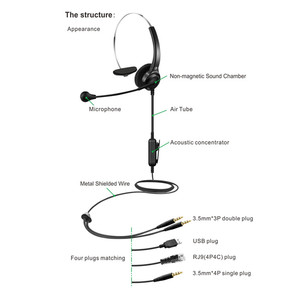
Anti-radiation call center headsets (such as specialized Ibrain acoustic line models) utilize air-tube sound conduction or shielded cabling to isolate high-frequency electromagnetic interference (EMI) away from the user's head. By placing the acoustic driver housing further down the cable line and delivering sound through hollow air tubes, RF and magnetic field radiation at the earpiece is reduced by over 90% compared to standard direct-drive earpieces.
Request Factory-Direct Quotations & Evaluation Samples
Connect directly with our senior acoustic engineering and enterprise OEM sourcing team. Receive complete Bill-of-Materials breakdowns, compliance documentation, and evaluation units for enterprise testing.
Contact Us