
Featured Commercial Audio & Soundbar Products
Explore our primary manufacturing line-up, featuring active noise-canceling acoustics, high-power party subwoofers, TV home theater soundbars, and commercial wireless systems built for global export.
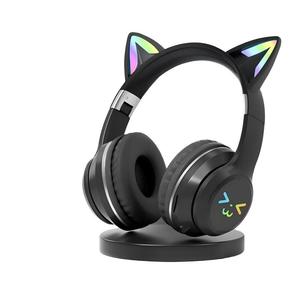
Kids Gradient Color Cat Ear Wireless 5.3 ANC Headset
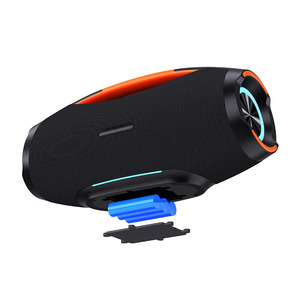
80W Portable Outdoor Speaker Bluetooth 5.3 RGB Boombox
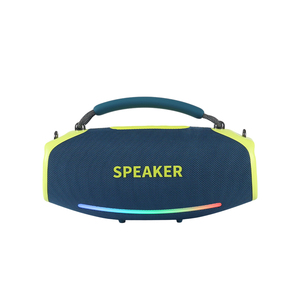
Portable Powerful 2.1CH Outdoor Boombox Speaker
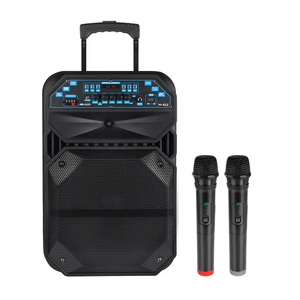
12-Inch Mobile Telescopic Outdoor Subwoofer Speaker
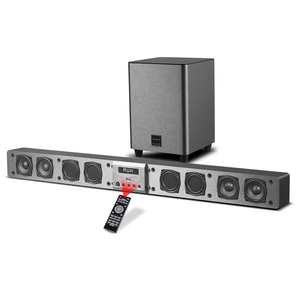
2.1 Channel Home Theater Soundbar with Subwoofer

ZEALOT 250W IPX6 Waterproof Portable Party Speaker
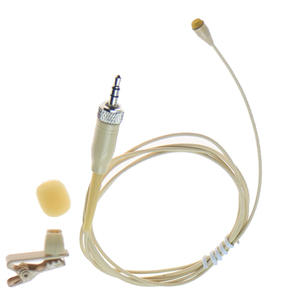
D4060 Professional Mini Lavalier Lapel Microphone

Smart Touch-Screen Wireless Earbuds ANC+ENC BT 5.4
Navigating the Global Soundbar Speaker Sourcing Landscape
An authoritative analysis on evaluating high-volume audio OEMs, acoustic hardware integration, digital signal processor (DSP) tuning capabilities, and export compliance.
The global home entertainment audio market has experienced a fundamental shift. Modern slim-bezel televisions lack the physical depth required to house competent acoustic transducers, turning soundbars from optional accessories into essential centerpieces of home audio systems. Consequently, international procurement teams, consumer electronics brand managers, and regional audio distributors face the complex task of selecting top-tier OEM/ODM factories capable of fulfilling stringent quality control standards, advanced signal processing demands, and tight export timelines.
Identifying a premier soundbar speaker factory and exporter requires evaluating technical benchmarks far beyond basic box assembly. Truly competent acoustic manufacturing facilities operate fully automated SMT (Surface Mount Technology) lines for mainboard assembly, maintain fully calibrated acoustic anechoic chambers for distortion verification, and hold official licensing for multi-channel spatial audio decoders such as Dolby Atmos and DTS:X. This sourcing guide outlines the core parameters, empirical evaluation criteria, and market dynamics that govern successful B2B soundbar procurement.
Top 10 Soundbar Speaker Factory & Exporter Selection Matrix
When auditing potential soundbar manufacturing partners, enterprise buyers must evaluate operational and technical capabilities across five key engineering pillars.
| Evaluation Pillar | Key Technical Requirements | Tier 1 Factory Benchmark | Procurement Risk Factor |
|---|---|---|---|
| 1. Acoustic Architecture | Custom driver design, enclosure tuning, passive radiator alignment, dynamic EQ. | In-house acoustic simulation (COMSOL, FEA), full anechoic validation labs. | Phase cancellation, cabinet resonance distortion, weak dynamic bass. |
| 2. DSP & Signal Processing | Analog Devices / Sunplus / Realtek DSP integration, customizable firmwares. | Proprietary tuning algorithms (XBass, Dynamic Vocal Enhancement, Night Mode). | Muffled vocal clarity, clipping at high SPL, poor channel separation. |
| 3. Licensing & Compliance | Dolby Atmos, DTS:X, HDMI eARC, HDCP 2.3, CE, FCC, RoHS, REACH certifications. | Direct licensing partner status, pre-certified modular hardware designs. | Customs seizure, delayed market launch, severe royalty penalty liability. |
| 4. SMT & Electronics Quality | Lead-free SMT lines, 3D AOI inspection, automated IC programming, burn-in testing. | 100% automated optical inspection with 48-hour thermal stress testing. | PCB solder bridge failures, high field return rates, power supply burnout. |
| 5. Supply Chain Resilience | Tooling capabilities, raw driver supply, wooden/plastic cabinet manufacturing. | Vertical integration with in-house injection molding and CNC woodworking. | Lead time slippage, volatile BOM cost surges, inconsistent material batch quality. |
Pro-Tip for Audio Sourcing Directors:
Never evaluate a soundbar supplier solely on unweighted Wattage specifications. Peak Power (PMPO) is frequently inflated. Demand standardized RMS (Root Mean Square) power metrics measured at <1% THD (Total Harmonic Distortion) across the full 20Hz – 20kHz acoustic frequency spectrum.
Future Procurement Trends in Soundbar Manufacturing (2025–2030)
Staying competitive requires anticipating consumer technology cycles. Sourcing teams must prioritize manufacturers currently investing in next-generation audio standards.
Spatial Audio & Dolby Atmos Integration
Traditional 2.1 stereo soundbars are rapidly giving way to 5.1.2 and 7.1.4 multi-channel configurations. Up-firing height drivers and object-based spatial audio decoding allow soundbars to project sound overhead, creating immersive theater-grade soundscapes within compact footprints.
Low-Latency 5.8GHz Subwoofer Links
Legacy 2.4GHz wireless subwoofers suffer heavy packet loss and lag due to overcrowded Wi-Fi and Bluetooth channels. Advanced soundbar factories are migrating to dedicated 5.8GHz audio transmission, offering sub-20ms wireless latency and lossless low-frequency signal delivery.
HDMI 2.1 eARC & Single-Remote CEC Control
Consumers demand frictionless connectivity. Next-gen soundbars utilize high-bandwidth HDMI 2.1 Enhanced Audio Return Channel (eARC), enabling uncompressed 24-bit/192kHz PCM transmission alongside TV remote pass-through protocol synchronization via HDMI CEC.
Smart Ecosystems & Multi-Room Wi-Fi
Modern commercial soundbars double as smart home hubs. Leading OEM platforms embed Wi-Fi 6 chips supporting Apple AirPlay 2, Spotify Connect, Google Cast, and Amazon Alexa voice interaction directly into the soundbar’s primary system-on-chip (SoC).
Adaptive DSP & AI Voice Clarity
Integrating real-time AI sound processing allows soundbars to dynamic-compress background dynamic spikes while boosting human vocal dialogue frequencies, eliminating the common user pain point of unpredictable video audio jumps during night viewing.
Sustainable PCR Plastics & FSC Wood
Global ESG mandates dictate sustainable product design. Leading exporters now offer Post-Consumer Recycled (PCR) plastic enclosures, ocean-bound plastic speaker grilles, and FSC-certified MDF wooden subwoofers with eco-friendly plastic-free retail packaging.
Engineering Principles Behind World-Class Soundbar Manufacturing
Superior sound output stems from rigorous acoustic engineering, physical chamber design, and proprietary power optimization algorithms.
Building a market-leading soundbar requires solving severe mechanical constraints. A typical soundbar enclosure possesses narrow physical internal volume, creating natural physical barriers to deep bass extension. Premier acoustic factories overcome these physical limits through engineered driver geometry, dual passive radiator tuning, and active dynamic EQ power management algorithms.
Our OEM manufacturing lines employ proprietary acoustic management solutions engineered to optimize real-world sound delivery:
- XBass Dynamic Bass Enhancement: A dedicated hardware-level DSP algorithm that continuously monitors low-frequency output and dynamically adjusts driver excursion in real time. This allows ultra-compact soundbar enclosures to output deep, punchy low-end down to 45Hz without mechanical driver bottoming or distortion.
- RunStretch Power Balancing Algorithm: An adaptive power boost-and-buck control circuit that regulates power delivery between the soundbar's multi-channel amplifiers. RunStretch prevents voltage drops during peak transient passages, keeping audio output clear and undistorted even at maximum SPL levels.
- Personalized Audiodo Hearing Integration: Select high-tier OEM soundbars integrate advanced hearing calibration software. By measuring individual user hearing sensitivity across frequencies via a connected smartphone application, the soundbar creates a tailored acoustic frequency profile tailored specifically to the listener's ear structure.
Frequently Asked Questions by OEM/ODM Buyers
Direct answers to crucial operational questions regarding soundbar manufacturing, MOQ thresholds, custom tooling, quality assurance, and compliance standards.
What is the typical Minimum Order Quantity (MOQ) for custom OEM soundbar manufacturing?
How do top soundbar factories handle Dolby Atmos and DTS licensing compliance?
What is the standard lead time for mass production and prototype sample delivery?
What acoustic quality control and reliability testing procedures are conducted on factory lines?
Can soundbars be customized with localized language software and custom Bluetooth pairing strings?
What safety, radio, and environmental certifications are required for exporting soundbars to North America and Europe?
What are the advantages of wooden MDF subwoofers versus plastic subwoofer enclosures?
Does the factory provide post-sales spare parts and warranty support for overseas distributors?
Why Partner with Our Soundbar Manufacturing Network?
Combining advanced manufacturing technology with deep acoustic R&D to provide global brands with reliable, high-yield audio production capabilities.
ISO9001 & ISO14001 Certified Facilities
Our modern production complex adheres strictly to international quality management and environmental safety systems, ensuring every production batch matches validated golden samples.
Full In-House Tooling & Molding
By housing our own CNC precision tooling studio and plastic injection machinery, we drastically reduce lead times for custom housing designs while safeguarding proprietary OEM intellectual property.
Strict Defect Target (<0.3% RMA)
Automated component placement combined with multi-stage online acoustic calibration guarantees exceptional yield stability, protecting your brand reputation in global retail markets.
Accelerate Your Audio Product Launch Today
Partner with an industry-leading soundbar speaker factory & exporter. Request complete product catalogs, factory audit reports, and instant OEM/ODM manufacturing quotes from our engineering team.