
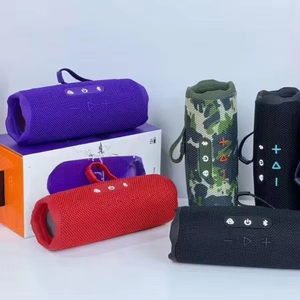
Factory Catalog
High-Performance Custom OEM Subwoofer Lineup
Explore our turnkey OEM/ODM acoustic platforms engineered for high dynamic bass range, IPX6/IPX7 waterproof durability, long battery lifecycles, and global compliance.
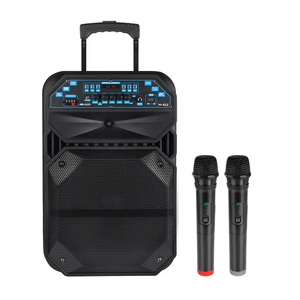
Hot Sale New 12inch Outdoor Mobile Telescopic Square Dance Subwoofer Speaker Wireless Microphone Large Audio Blue Tooth Speakers
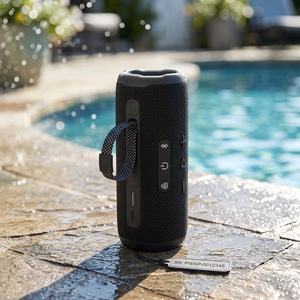
Wireless for 5.3 Speaker Waterproof Portable Subwoofer 10-30W Output AirPlay Support 3-5 Hours Battery Life Serial Number
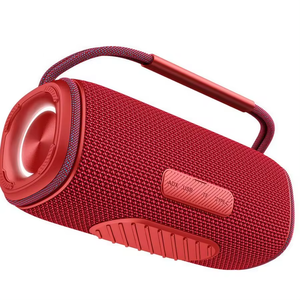
40W Outdoor Bluetooth Speaker IP67 Waterproof Bass Audio Subwoofer Wireless Speaker
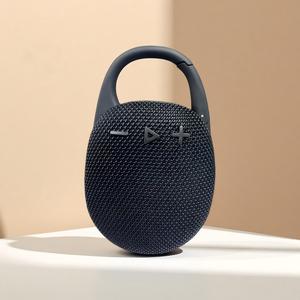
Custom Logo Portable Mini Waterproof Bluetooth Subwoofer Speaker
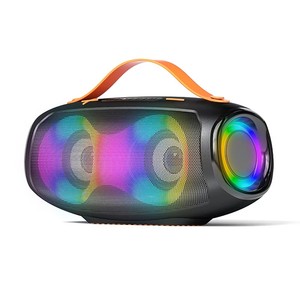
Light Weight RGB Subwoofer Bass Wireless Speaker with Handle Wireless Stereo Speaker Parties
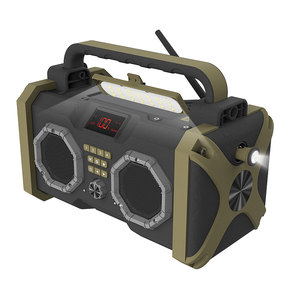
IPX6 Waterproof Power Bank Home Digital Radio Outdoor Subwoofer Speakers Professional Desktop Water Proof Tws Speaker 40W
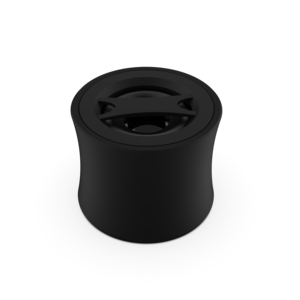
Metal Subwoofer BT Speaker
50+
Acoustic & Firmware Engineers
15,000 m²
ISO9001/14001 Factory Facility
3.5M+
Annual Unit OEM Production Capacity
100%
Full Anechoic & QC Aging Tested
Manufacturing Excellence
End-to-End OEM & ODM Engineering Capabilities
From custom acoustic architecture to bespoke cosmetic design, we empower global brands to stand out in the crowded consumer audio space.
Proprietary Acoustic Tuning
Integrating advanced XBass algorithmic DSP enhancement and active dynamic power boost/buck technologies (such as RunStretch power balancing) to deliver room-shaking low-frequency extension without thermal dynamic distortion.
IPX6 / IPX7 Water Immersion Sealing
Precision liquid silicone rubber (LSR) injection molding, waterproof acoustic mesh membrane covers, and hermetically sealed sonic chambers ensuring zero water ingress under harsh outdoor environment conditions.
Custom Tooling & Material Options
Full customization over chassis materials, including aircraft-grade aluminum alloy metal mesh, impact-resistant ABS+PC plastics, eco-friendly recycled polymers, custom fabric weave colors, and synchronized RGB ambient lighting rings.
Global Sourcing Whitepaper: The Evolution of Custom OEM Subwoofer Bluetooth Speakers
The global market for wireless portable audio has undergone a seismic shift. Today’s international buyer—ranging from established consumer electronics brands to regional audio distributors—no longer seeks off-the-shelf, commoditized Bluetooth speakers. Instead, modern search intent and commercial procurement strategies focus heavily on Custom OEM Subwoofer Bluetooth Speaker Manufacturers & Factories capable of delivering bespoke acoustic engineering, optimized dynamic range, extended battery performance, and robust supply chain resilience.
This industry whitepaper explores the critical engineering parameters, procurement trends, and manufacturing innovations defining next-generation wireless subwoofers. By evaluating transducer design, DSP tuning, enclosure dynamics, and battery management, procurement managers can make data-driven decisions when partnering with OEM/ODM audio factories.
1. Transducer & Radiator Architecture: The Physics of Deep Bass in Compact Enclosures
Achieving resonant, distortion-free sub-bass in portable enclosures requires circumventing traditional acoustic limitations defined by Hoffmann’s Iron Law (which states that efficiency, low-frequency output, and enclosure volume are inextricably linked). Leading OEM factories overcome these physical constraints through a combination of high-excursion long-throw drivers and tuned passive radiators.
- High-Neodymium Magnet Motor Assemblies: Custom OEM subwoofers utilize high-grade N42 or N48 Neodymium-Iron-Boron (NdFeB) magnet structures. These motors produce ultra-dense magnetic flux within the voice coil gap, driving heavy-gauge voice coils without thermal shutdown even under sustained high-wattage RMS loads.
- Dual-Opposing Passive Radiators: To eliminate mechanical cabinet vibration and enhance sub-bass SPL (Sound Pressure Level) between 40 Hz and 80 Hz, OEM manufacturers integrate dual passive radiators placed in a force-canceling configuration. As the active subwoofer cone moves forward, back-pressure forces the passive diaphragms outward, dramatically expanding acoustic air displacement without requiring additional amplifier power.
- Form-Factor Dynamic Tuning: From compact bike-mountable speakers (e.g., StormBox Micro series) to large-scale mobile party boomboxes equipped with 12-inch active subwoofers, acoustic engineers adjust diaphragm stiffness and spider compliance to prevent harmonic distortion (THD < 0.5% at 1kHz).
2. Digital Signal Processing (DSP) & Firmware Innovations
Hardware design accounts for only half of the performance equation in modern wireless speakers. Advanced Digital Signal Processing (DSP) algorithms serve as the acoustic core, shaping frequency output in real time based on volume levels and audio genre profiles.
OEM factories specialize in customizing proprietary firmware algorithms that elevate consumer acoustic perception:
- Dynamic Bass Enhancement (XBass Algorithms): Proprietary bass algorithms monitor peak audio excursion signals. At low-to-medium volumes, the DSP dynamically boosts psychoacoustic sub-bass harmonics, making compact subwoofers sound substantially larger than their physical footprint. At maximum volume, multi-band limiters prevent mechanical clipping.
- Adaptive Power Boost & Buck (RunStretch Optimization): Battery voltage drops as lithium-ion cells discharge. Advanced power-management algorithms adaptively buck and boost internal rail voltage to maintain stable amplifier output, preventing volume drop-off during outdoor events.
- Custom Equalization & Audiodo Personalization: High-end OEM platforms can integrate personalized hearing-detection algorithms, allowing end-users to calibrate EQ parameters via iOS/Android companion mobile apps developed under white-label software agreements.
3. Procurement Benchmarks: Evaluating OEM Factory Capabilities
Selecting the right OEM/ODM speaker manufacturer requires rigorous due diligence across operational and technical benchmarks. The table below outlines key technical metrics procurement officers must evaluate during supplier auditing:
| Evaluation Vector | Standard Market Specification | Tier-1 OEM Factory Benchmark | Procurement Impact |
|---|---|---|---|
| Acoustic Distortion (THD) | < 3.0% at nominal output | < 0.5% at rated RMS power | Prevents listener fatigue, delivers audiophile-grade voice clarity. |
| Waterproofing Level | IPX4 (Splash-resistant) | IPX7 / IP67 Fully Submersible | Drastically lowers warranty RMA return rates in outdoor retail channels. |
| Bluetooth System-on-Chip | Generic BT 5.0 (SBC codec) | BT 5.3 / 5.4 + LE Audio & Auracast | Ensures sub-50ms latency, multi-speaker broadcast, and lower power consumption. |
| Battery Cell Quality | Standard 18650 cells (300 cycles) | EV-Grade 21700 / LiFePO4 (800+ cycles) | Extends product lifespan, enables fast 45W USB-C PD reverse power-bank charging. |
| Tooling & Mold Precision | Tolerance ±0.10 mm | CNC High-Precision ±0.02 mm | Eliminates acoustic panel rattles under high sub-bass vibration. |
4. Future Sourcing & Tech Trends (2025–2030)
As retail buyers plan their product roadmaps for upcoming sales cycles, several critical tech trends are reshaping the OEM wireless audio manufacturing landscape:
A. Bluetooth 5.4 LE Audio & Auracast Broadcast Mode: Next-generation subwoofers are moving away from traditional True Wireless Stereo (TWS) pairing limited to two devices. OEM factories are implementing Auracast protocols, enabling a single master audio source (smartphone, TV, or live microphone) to broadcast synchronized audio to hundreds of nearby subwoofer speakers simultaneously without latency drift.
B. Multi-Driver Hybrid Acoustics in Portable Form Factors: High-end party speakers and outdoor subwoofers are incorporating multi-way driver topologies—pairing dedicated silk-dome tweeters, neodymium mid-range drivers, and long-throw downward-firing woofers powered by discrete Class-D multi-channel amplifiers.
C. Sustainable Materials & Eco-Certifications: European and North American retail regulations increasingly prioritize sustainable supply chains. Tier-1 OEM factories now offer Post-Consumer Recycled (PCR) plastics for internal chassis frameworks, eco-friendly water-based acoustic coatings, and plastic-free soy-ink retail packaging.
D. Dual-Function Emergency & Outdoor Integration: Modern subwoofers double as rugged utility stations, featuring high-capacity integrated lithium power banks, emergency FM digital radios, emergency LED lighting, and solar-charging auxiliary inputs for off-grid outdoor utility.
Turnkey Process
Standard OEM / ODM Customization Workflow
From initial industrial design concept to mass-production shipping, our standardized workflow guarantees rapid time-to-market with strict quality control.
01
Acoustic Engineering
3D acoustic simulation, chamber volume calculation, driver selection, and initial DSP algorithm tuning.
02
Tooling & Prototyping
Rapid 3D SLA printing, CNC mockups, tooling mold creation, and initial golden sample sign-off.
03
SMT & Assembly
High-speed SMT placement for Bluetooth PCBA, automated liquid silicone sealing, and structural assembly.
04
Strict Quality Testing
Full anehoic chamber audio sweeps, IPX7 immersion testing, drop test verification, and thermal burn-in aging.
05
Global Logistics
International regulatory certification handling (CE, FCC, RoHS, REACH, BQB, TELEC) and freight shipping.
Buyer Questions
Frequently Asked Sourcing & Manufacturing FAQs
Key insights for brands, importers, and retail buyers looking to partner with specialized subwoofer Bluetooth speaker factories.
What is the typical Minimum Order Quantity (MOQ) for custom OEM subwoofer speakers?
Our standard Minimum Order Quantity (MOQ) for custom logo white-label branding starts at 500 to 1,000 units per model using our existing tooling molds. For fully custom ODM projects requiring dedicated plastic injection tooling, custom acoustic enclosure design, and bespoke PCBA layouts, the typical tooling MOQ is 3,000 to 5,000 units.
Can we customize the Bluetooth pairing name, sound prompts, and mobile app interface?
Yes, absolutely. Under our turnkey OEM program, we offer complete firmware customization. We can hardcode your custom brand Bluetooth pairing broadcast name (SSID), program custom localized voice boot/pairing prompts in any target language, laser-engrave corporate branding on hardware chassis, and customize white-label iOS/Android app interfaces with your corporate visual identity.
How do your factories ensure deep bass performance in waterproof IPX7 enclosures?
Waterproofing sealed enclosures often traps air pressure, which can restrict cone movement. Our engineers overcome this by pairing high-flux Neodymium motors with custom-molded liquid silicone rubber (LSR) passive radiator surrounds and expanded acoustic air chambers. Waterproof acoustic mesh covers allow internal acoustic pressure to vent safely without permitting liquid penetration.
What regulatory compliance and certifications do your OEM speakers possess for global export?
All our manufacturing facilities operate under ISO9001 and ISO14001 quality and environmental management systems. Our speaker products hold complete global certifications, including CE, FCC, RoHS, REACH, BQB (Bluetooth SIG Licensing), MSDS, UN38.3 (Lithium Battery Transport Certification), KC (Korea), and TELEC (Japan), facilitating smooth customs clearance across all target retail markets.
What is the production lead time for sample development and mass manufacturing?
Standard OEM functional golden samples with customized artwork are typically produced within 7 to 12 working days. Once samples are approved and deposit confirmed, mass production lead times generally range between 30 to 45 days, depending on component availability (such as specialized Bluetooth SoCs or custom fabric weaves) and total order volume.
How does your factory protect our Intellectual Property (IP) and proprietary designs?
We enforce strict legal non-disclosure agreements (NDAs) prior to receiving any customer engineering drawings or design briefs. All custom ODM tooling molds created for your project remain your exclusive property. We guarantee that proprietary custom tooling, unique cosmetic enclosures, and brand-exclusive firmware will never be offered or resold to third-party competitors.
Ready to Launch Your Custom OEM Subwoofer Line?
Partner with an industry-leading Bluetooth speaker factory. Contact our senior acoustic engineering and procurement team today for custom quotes, technical specifications, and factory sample requests.
Get a Quote