
Featured OEM Audio & Communication Hardware
Explore our flagship electroacoustic solutions engineered for global consumer electronics brands, call centers, and broadcast audio distributors.
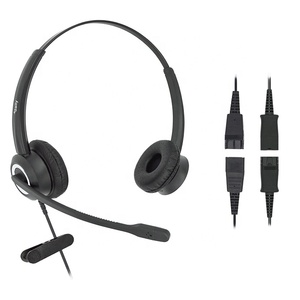
Microphone Noise Cancelling QD to RJ9 3.5mm USB Call Center Phone Headset with Hearing Protection Feature
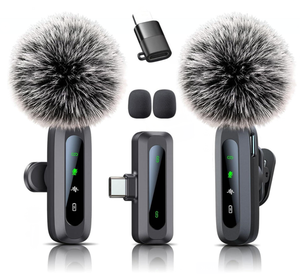
J3 Mini Wireless Lavalier Microphone Auto Pairing Mute Noise Reduction For IPhone Android-Type C Connector Wireless Clip
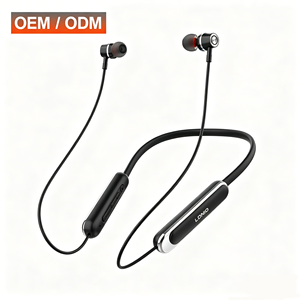
LDNIO N06 Low Latency BT 5.4 Neckband Headphones 35H Battery Life Magnetic Earbuds for Phone Call Gaming
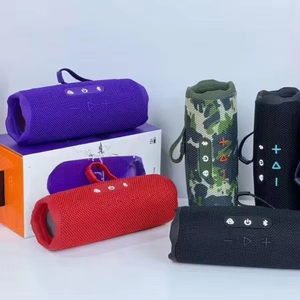
USA Stock New 7 Speakers Stereo Bass Outdoor Waterproof Subwoofer Portable Wireless BT 7
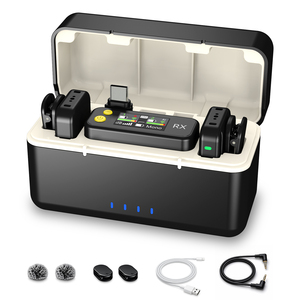
Wireless Lapel Mini Microphone OEM ODM Custom Logo Lag Free Low Latency for Broadcasters with Live Feeds and Stream Recordings
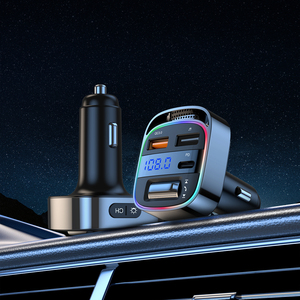
Car Bluetooth Adapter Wireless FM Audio Receiver PD QC3.0 Charger Handsfree Call USB Music Voltage Display Ambient Light
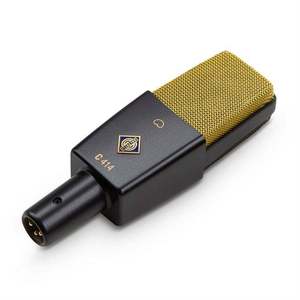
BAIFEILI C414 Professional Condenser Microphone XLR With 34mm Large Diaphragm Cardioid Mic For Singing/Recording/Streaming
Architectural Evolution of Dual-Microphone Acoustic Engineering in OEM/ODM Sourcing
In the contemporary wireless audio landscape, consumer expectation for voice pickup clarity during phone calls, online meetings, and gaming sessions has migrated from a "value-add feature" to a non-negotiable core performance metric. As an industry-leading Custom OEM Dual Mic Earbuds Factory & Exporter, our manufacturing philosophy centers on overcoming physical acoustic constraints through proprietary hardware design, precise mechanical cavity tuning, and state-of-the-art Digital Signal Processing (DSP) algorithms.
Traditional single-microphone True Wireless Stereo (TWS) earphones rely entirely on omnidirectional electret or MEMS sensors that capture both the user's voice and surrounding ambient noise without discrimination. When deployed in noisy environments—such as crowded subways, high-wind outdoor trails, or busy open-plan offices—single-mic solutions fail to isolate the target speech frequency. This results in severe intelligibility degradation, voice clipping, and listener fatigue on the receiving end.
To deliver true enterprise-grade clear calls, modern audio brand owners are turning to custom dual-microphone arrays integrated with Environmental Noise Cancellation (ENC) technology. This whitepaper analyzes the engineering mechanics, supply chain dynamics, and future procurement paradigms governing high-performance dual-mic OEM earbuds.
Dual-Beamforming Microphones
Strategic placement of Primary (Voice) and Secondary (Ambient) MEMS microphones creates a directional acoustic beam aimed precisely at the user's mouth while phase-canceling external noise.
Proprietary XBass & RunStretch
Integrated DSP algorithms boost low-end dynamic response without distorting vocals, supported by adaptive buck-boost power management for extended playtimes.
Rigorous Quality Assurance
100% electroacoustic testing via SoundCheck and APx555 audio analyzers guarantees phase consistency, frequency linear response, and IPX7 waterproofing across mass production runs.
How Dual-Microphone Noise Cancellation Works: Technical Mechanics
The core operation of a dual-microphone TWS earbud setup relies on spatial separation and differential signal filtering. By positioning two distinct silicon MEMS microphones within a compact earbud enclosure, our acoustic engineers create two separate channel inputs for the DSP engine:
- Primary Talk Microphone (FF / Bottom Port): Positioned at the bottom stem or outer shell pointing directly toward the speaker's mouth. It captures a rich composite audio signal containing high-amplitude voice frequencies combined with ambient background noise.
- Secondary Reference Microphone (FB / Top Port): Positioned on the upper outer acoustic chamber, facing away from the mouth. It predominantly samples environmental background noise (such as wind turbulence, traffic rumble, or HVAC hum) while receiving minimal direct voice signal.
Once both analog acoustic signals are converted into digital streams via low-power 24-bit Codecs, the integrated Qualcomm cVc 8.0, Realtek, or BES AI-powered DSP applies adaptive beamforming formulas. The adaptive filter calculates the time-of-arrival difference ($\Delta t$) and phase differential between the two channels. By subtracting the inverted ambient waveform gathered by the secondary microphone from the composite signal of the primary microphone, the system achieves up to 35 dB to 45 dB of background noise suppression without truncating natural vocal harmonics.
Comparative Matrix: Acoustic Architecture Performance Standards
| Acoustic Architecture | Noise Reduction (dB) | Wind Noise Isolation | Speech Intelligibility Index (STI) | BOM Cost / Complexity |
|---|---|---|---|---|
| Single MEMS Microphone | 0 - 5 dB (Software EQ only) | Poor (< 10 km/h threshold) | 0.45 (Moderate) | Low / Minimal OEM lead time |
| Standard Dual Mic (ENC) | 25 - 35 dB (Beamforming DSP) | Good (Up to 25 km/h) | 0.78 (High Quality) | Optimal Balance for Mass Market |
| Hybrid Dual Mic + AI Neural Network | 35 - 48 dB (Deep Learning DSP) | Superior (Up to 45 km/h) | 0.92 (Broadcast Quality) | Premium Tier / Enterprise Sourcing |
| Triple Mic ANC + Bone Conduction | > 50 dB (Hybrid ANC + VPU) | Maximum (Extreme Environments) | 0.96 (Near Zero Distortion) | High / Specialized Tooling Required |
2025–2030 Global Sourcing & Procurement Trends for Wireless Audio
As global retail brands, telecommunication operators, and private-label e-commerce sellers re-evaluate their supply chain strategies, the criteria for selecting an OEM/ODM manufacturing partner in mainland China have shifted dramatically. Procurement directors are no longer looking strictly for the lowest per-unit FOB cost; they require comprehensive product life cycle scalability, stringent environmental compliance, and differentiated acoustic software tuning.
1. Transition from Standard Bluetooth 5.3 to Bluetooth 5.4 & LE Audio (LC3 Codec)
The global wireless earphone market is rapidly standardizing around Bluetooth 5.4 architecture, offering enhanced periodic advertising responses, lower power consumption, and seamless multi-device multipoint connectivity. Crucially, the adoption of Low Complexity Communication Codec (LC3) under LE Audio specs enables custom TWS earbuds to transmit high-definition sound at half the bit-rate of legacy SBC codecs. This technological leap allows factories to scale down battery capacity requirements without sacrificing battery operational hours, yielding lighter, more ergonomic industrial designs.
2. AI-Driven On-Chip Environmental Noise Cancellation (ENC) Algorithms
Hardware capabilities are now inextricably linked with software intelligence. Advanced OEM factories must possess in-house firmware debugging and DSP algorithm customization teams. Modern dual-mic TWS setups incorporate Neural Network (NN) software models trained on over 500 hours of diverse acoustic soundscapes (office chatter, subway squeals, coffee shop ambient noise, rain, and high wind). When sourcing custom earbuds, buyers increasingly demand custom EQ app integration and OTA (Over-The-Air) firmware update capabilities for end-users.
3. Sustainable Manufacturing & Post-Consumer Recycled (PCR) Plastics
Driven by strict European Union regulations (such as the EU Ecodesign Regulation and WEEE directives), major audio brand buyers are instructing OEM suppliers to replace virgin ABS/PC plastics with certified PCR materials. Leading exporters now provide full traceability certificates for 30% to 75% recycled plastic housing, halogen-free PCB assemblies, and 100% plastic-free soy-ink retail packaging.
4. Customization Flexibility: Modular Tooling & Agile Low-MOQ Execution
To reduce inventory carry risks in volatile retail environments, enterprise procurement teams favor OEM factories that offer modular private-mold platforms. By utilizing pre-tested internal acoustic cavities and standardized PCB layouts, brand owners can introduce custom cosmetic shell modifications, distinct laser-etched branding, customized touch-control schemes, and bespoke charging case battery indicators with significantly reduced initial tooling NRE (Non-Recurring Engineering) expenses and expedited 30-day time-to-market windows.
Ready to Scale Your Audio Brand with Master Acoustic OEM Engineering?
Partner with an industry-certified factory backed by 45+ acoustic engineers, advanced SMT lines, and complete white-label OEM/ODM solutions tailored to your market requirements.
Inquire NowWhy Partnering with Our OEM/ODM Export Factory Delivers Information Gain & Competitive Edge
Building a successful consumer audio product line requires more than assembling off-the-shelf components. It demands deep vertical integration, precise acoustic measurement, and absolute quality consistency across mass production batches. Drawing upon decades of electroacoustic expertise and state-of-the-art manufacturing infrastructure, our OEM platform delivers distinct competitive advantages for global brand partners:
In-House Acoustic Research & Proprietary Algorithms
Unlike standard assembly workshops that rely entirely on stock third-party Bluetooth modules, our engineering lab develops customized acoustic tuning profiles in-house. Our proprietary sound-enhancing algorithms—such as dynamic low-frequency extension (XBass Technology) and dynamic power equalization (RunStretch Battery Management)—ensure that our dual-mic earbuds deliver full-bodied audio fidelity even under demanding outdoor conditions.
End-to-End Manufacturing Rigor & Testing Standards
Located in high-tech industrial hubs, our manufacturing facilities operate under strict ISO 9001, ISO 14001, and BSCI social compliance frameworks. Every unit leaving our production line undergoes rigorous automated electroacoustic testing:
- Anechoic Chamber Acoustic Calibration: Verifying left/right channel frequency balance ($\pm 1$ dB tolerance) and total harmonic distortion (THD $< 1\%$).
- Audio Precision (APx555) Signal Analysis: Testing dual-microphone beamforming directional attenuation and signal-to-noise ratio (SNR $> 64$ dB).
- Environmental Stress Testing: Micro-drop tests, thermal shock exposure ($-20^\circ\text{C}$ to $+65^\circ\text{C}$), salt-spray corrosion resistance for charging contacts, and IPX5/IPX7 waterproof immersion verification.
Global Regulatory Compliance & Turnkey Supply Chain Support
Exporting TWS earbuds into North American, European, and Asia-Pacific markets requires seamless navigation of international regulatory landscapes. We provide complete certification compliance dossiers for every OEM product line, including FCC, CE, RoHS, REACH, TELEC, Anatel, KC, and UN38.3 transport safety documentation for lithium-polymer batteries. Our dedicated logistics team supports DDP, FOB, and CIF shipping protocols with localized warehouse fulfillment services.
Frequently Asked Questions (FAQ) for OEM Sourcing Buyers
Find authoritative answers regarding technical specifications, minimum order quantities (MOQ), custom tooling, and export procedures.
What is the difference between Dual-Mic ENC and Active Noise Cancellation (ANC)?
What are the typical MOQs and lead times for custom OEM/ODM earbud projects?
Can your factory customize the DSP dual-mic noise-canceling software profile?
How do you ensure waterproofing integrity (IPX5 / IPX7) during mass assembly?
What compliance documentation and safety certifications do you provide for export?
Request a Custom OEM Quote & Engineering Sample
Consult with our senior electroacoustic engineering team today to review your project requirements, receive detailed BOM cost breakdowns, and secure evaluation samples.
Inquire Now