
Featured Low-Latency & Professional Audio Solutions
Directly sourced from China’s leading electro-acoustic manufacturing facilities. Engineered for high-speed gaming synchronization, crystal-clear communication, and ergonomic outdoor durability.
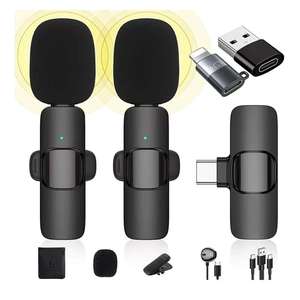
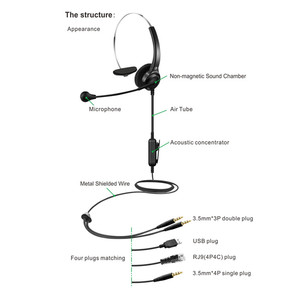
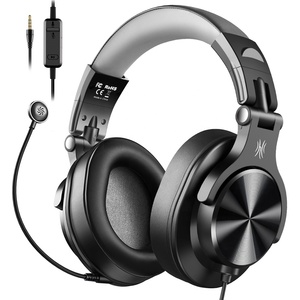
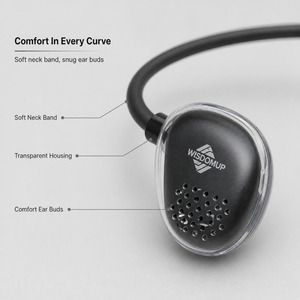
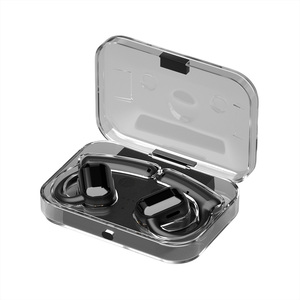
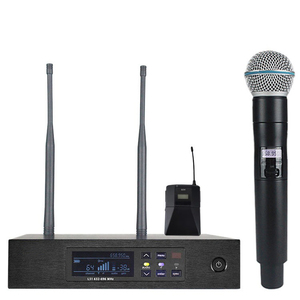
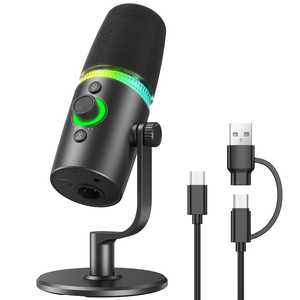
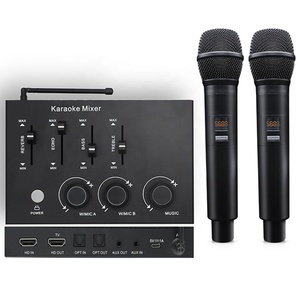
The Shift in Chinese Acoustic Manufacturing: Conquering the Latency Barrier
The global demand for high-performance True Wireless Stereo (TWS) audio gear has shifted dramatically from basic wireless connectivity toward imperceptible audio-visual synchronization. For global brands, distributors, and sourcing officers, understanding China’s electro-acoustic manufacturing ecosystem requires evaluating how top-tier OEMs combine silicon-level firmware optimization, custom RF antenna design, and proprietary audio algorithms.
Standard Bluetooth audio transmission traditionally carries a latency penalty ranging from 150ms to 300ms—unacceptable for competitive FPS (First-Person Shooter) gaming, live performance monitoring, and interactive virtual reality (VR) environments. Chinese OEM factories located across Shenzhen, Dongguan, and Huizhou have engineered breakthrough solutions utilizing dual-mode 2.4GHz proprietary wireless dongles, Bluetooth 5.4 Low Energy (LE) Audio protocols with LC3 codecs, and custom DSP dynamic buffering. As a result, sub-20ms wireless latency is now achievable in mass-production commercial models.
Factory Competencies & Enterprise Manufacturing Advantages
Why top global audio brands rely on premier Chinese manufacturing centers for low latency TWS production, rapid engineering turns, and rigid quality assurance.
In-House Electro-Acoustic Tuning
Leading Chinese factories operate full-scale anechoic chambers, SoundCheck analysis rigs, and Audio Precision (AP) testing equipment. By integrating self-developed DSP dynamic bass algorithms (such as XBass technology) and adaptive boost/buck power management, drivers are tuned for maximal spatial separation without sacrificing low-end impact.
End-to-End OEM/ODM Integration
From initial industrial design (ID) rendering, 3D rapid prototyping, and custom acoustic enclosure tooling to automated Surface-Mount Technology (SMT) PCB assembly, advanced factories offer turnkey turn-around times. High-speed placement machines ensure flawless assembly of complex Bluetooth SoCs and RF circuitry.
Rigor Quality Control Protocols
Tier-1 manufacturers operate under ISO9001, ISO14001, and IATF16949 quality management frameworks. Finished earbuds undergo rigorous drop testing, thermal shock evaluation, IPX5 to IPX8 water-immersion trials, and 100% RF transmission line stability checks against standard AQL 0.65 thresholds.
Proprietary RF & Codec Firmware
Chinese acoustic engineers develop proprietary low-latency transmission protocols utilizing 2.4GHz ISM band frequency hopping. By writing custom firmware layers over Qualcomm, PixArt, Airoha, and Realtek chipsets, packet loss recovery during congested RF environments is dramatically enhanced.
Scalable Mass Production Capacity
Equipped with dust-free Class 100,000 cleanrooms and multi-line automated packaging systems, major Chinese manufacturing hubs guarantee stable monthly production capacities exceeding 2 million units, insulating global retail partners from supply chain bottlenecks.
Global Compliance & Certification Support
Full-service engineering teams provide seamless international certification filings including FCC ID, CE-RED, RoHS, REACH, TELEC, KC, and BQB (Bluetooth SIG) certification, ensuring hassle-free clearance into North American, European, and Asian retail networks.
Technological Innovation & Product Trends (2025–2030)
Key audio architecture evolutions transforming low-latency TWS gaming earbuds and professional communication headsets.
1. Dual-Mode 2.4GHz + Bluetooth 5.4 LE Audio Architecture
The standard Bluetooth protocol stack faces inherent queue delay due to retransmission algorithms. Future-ready Chinese factories are implementing hybrid dual-mode chip architectures. By pairing ultra-compact USB-C dongles operating on proprietary 2.4GHz RF bands alongside Bluetooth 5.4 LE Audio (LC3 Codec), earbuds can achieve sub-15ms audio latency on PCs and consoles while maintaining low-power Bluetooth pairing with mobile devices.
2. AI-Powered Neural Network ENC & Hybrid ANC Integration
Modern gaming and call-center headsets require precise voice isolation in high-noise environments. Next-gen Chinese TWS production integrates deep neural network (DNN) Environmental Noise Cancellation (ENC) algorithms running on multi-core DSPs. By combining feed-forward and feedback microphones with AI noise reduction models, background ambient noise is suppressed by up to 45dB while maintaining low vocal latency.
3. Spatial Audio with Dynamic Head Tracking
As immersive gaming and virtual media expand, low-latency spatial audio algorithms are migrating from premium consumer electronics into affordable OEM earbud platforms. By embedding 6-axis Gyroscope/Accelerometer sensors directly into the earbud PCB, Chinese factories allow real-time head-tracking DSP calculations at the edge, reducing positional sound rendering delay below 25ms.
4. Advanced Transducer Materials: Graphene & DLC Diaphragms
To deliver rapid transient response required for detecting footsteps and subtle audio cues in FPS games, transducer engineering has advanced beyond standard PET films. Chinese acoustic foundries are mass-producing 10mm to 13mm dynamic drivers coated with Graphene and Diamond-Like Carbon (DLC), delivering higher stiffness-to-mass ratios, lower total harmonic distortion (THD < 0.5%), and extended frequency responses up to 40kHz.
B2B Sourcing & Procurement Trends for Global Buyers
Navigating vendor selection, supply chain agility, and customizable OEM matrices when sourcing from Chinese audio factories.
Key Procurement Benchmarks for 2025+
1. Compressed NPI (New Product Introduction) Cycles: Brand owners no longer accept 12-month development schedules. Modern Chinese factories utilize modular internal tooling, standardized PCB pin layouts, and flexible acoustic chamber inserts to reduce time-to-market from concept approval to mass production down to 45–60 days.
2. ESG Compliance & Sustainable Packaging (PCR Plastics): Environmental criteria are reshaping consumer electronics sourcing. Leading Chinese suppliers provide Post-Consumer Recycled (PCR) ABS plastic housings, bio-degradable soy-ink packaging options, and full compliance with EU Battery Directive mandates.
3. Flexible Tiered Customization Matrices: To support both fast-growing digital brands and established enterprise distributors, factories offer tiered customization options—from white-label silk-screen branding (MOQs starting at 1,000 units) to deep ODM firmware alterations, custom EQ curve tuning, and bespoke charging case tooling (MOQs 5,000+ units).
Audio Solution Performance Matrix
Comparative technical benchmark detailing common OEM earbud categories manufactured in China.
| Product Category | Wireless Technology | Latency Benchmark | Driver Specifications | Battery Life (Earbuds/Case) | Primary Target Market |
|---|---|---|---|---|---|
| Dual-Mode Gaming TWS | 2.4GHz Dongle + BT 5.4 | 15ms - 20ms | 10mm Graphene Dynamic Driver | 6 Hours / 24 Hours | Competitive eSports & PC Gamers |
| Hybrid ANC Earbuds | Bluetooth 5.3 LE Audio | 40ms - 50ms | 12mm Composite PET + Titanium | 8 Hours / 32 Hours | Commuters & Business Professionals |
| Air Conduction / Open-Ear | Bluetooth 5.3 Direct-Pitch | 50ms - 65ms | 16.2mm Dynamic Directional Driver | 10 Hours / 40 Hours | Fitness, Running & Outdoor Sports |
| Call Center / Office Headsets | USB Wired / BT 5.2 + ENC | < 10ms (Wired) / 30ms (Wireless) | 40mm Neodymium Driver + Boom Mic | 35 Hours (Continuous Talk) | BPO Centers, Remote Work & Enterprise |
| Wireless Microphone Systems | UHF / 2.4GHz Digital Sync | < 5ms (Real-Time) | Condenser / Dynamic Mic Capsule | 8 Hours (Transmitter) | Vlogging, Streaming & Live Events |
Frequently Asked Purchasing & Factory Sourcing Questions
Expert guidance addressing common technical, operational, and commercial queries from overseas procurement teams.
How is sub-20ms low latency measured and verified in factory testing?
What are the typical Minimum Order Quantities (MOQs) for OEM vs. ODM production?
Can Chinese factories customize Bluetooth low-latency firmware for iOS and Android?
What quality assurance steps are taken to prevent RF interference and dropouts?
How are product samples ordered and evaluated prior to bulk production?
What international regulatory compliance certifications do Chinese audio factories provide?
Ready to Scale Your Wireless Audio Product Line?
Partner with top-tier Chinese electro-acoustic manufacturing specialists. Connect with our engineering and procurement team for factory audits, custom OEM/ODM RF quotes, and sample evaluation requests.