
Featured Bluetooth Audio Adapters & Transmitters
High-performance OEM/ODM wireless audio solutions engineered with advanced Bluetooth 5.0 - 5.4 chipsets, high-fidelity lossless codecs, and ultra-low latency architecture.
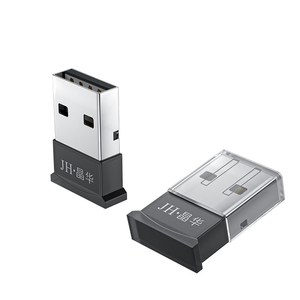
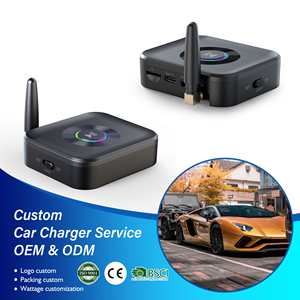
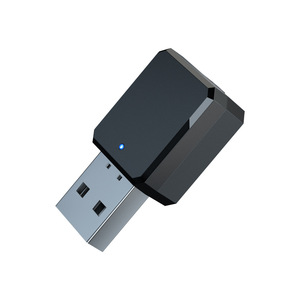
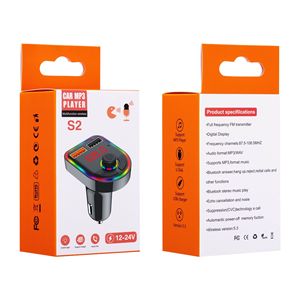
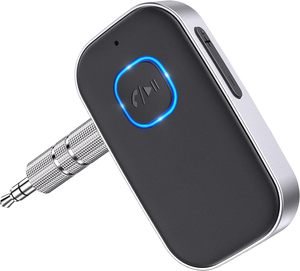

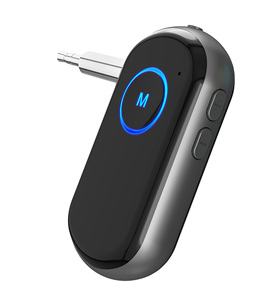
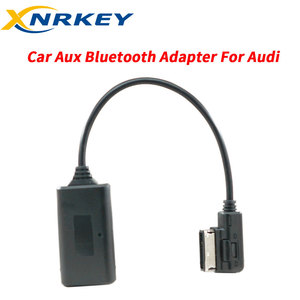
1. Comprehensive Overview of China's Bluetooth Audio Adapter Manufacturing Ecosystem
The global wireless audio ecosystem has undergone a radical architectural evolution over the past five years. Driven by the removal of legacy 3.5mm analog headphone jacks from flagship smartphones, the proliferation of Bluetooth-enabled smart home devices, and the skyrocketing demand for high-resolution automotive audio streaming, Bluetooth audio adapters have transitioned from simple convenience accessories into complex, high-performance acoustic nodes. China, particularly the Pearl River Delta industrial cluster spanning Shenzhen, Dongguan, and Guangzhou, manufactures over 85% of the world’s Bluetooth audio transmitters, receivers, dongles, and automotive FM modulators.
For international procurement managers, brand owners, and consumer electronics distributors, navigating China's vast supplier landscape requires an acute understanding of technical manufacturing capabilities. Leading Chinese manufacturers are no longer merely assembling low-cost plastic dongles; they operate sophisticated Surface Mount Technology (SMT) lines, cleanroom acoustic testing labs, automated RF spectrum analyzers, and in-house firmware development departments capable of customizing Bluetooth stacks down to the kernel level.
This industry whitepaper serves as an authoritative guide for evaluating China's top Bluetooth audio adapter manufacturers. It outlines technological benchmarks, future procurement trends, quality assurance protocols, and custom OEM/ODM workflows necessary to execute successful high-volume manufacturing partnerships.
2. Key Technological Trends Driving Bluetooth Audio Adapter Development
Understanding the hardware and software stack inside a Bluetooth adapter is vital when specifying Product Requirement Documents (PRDs) for OEM production. Leading Chinese factories utilize chipsets from top-tier silicon vendors such as Qualcomm, Realtek, Actions Semiconductor, and JieLi (JL), depending on the target market segment and price-performance ratio.
Bluetooth 5.3 & 5.4 Architecture
Next-generation Bluetooth stacks deliver significantly enhanced connection stability, lower power consumption via Isochronous Channels (BIS/CIS), and sub-20ms audio latency essential for gaming and TV applications.
Hi-Res Audio Codec Support
Modern adapters support high-bitrate codecs including aptX Adaptive, aptX Lossless, LDAC (up to 990kbps at 24-bit/96kHz), and LC3, delivering studio-grade sound over wireless connections.
Active Noise Isolation & Ground Loop Suppression
Integrated DSP algorithms eliminate alternator whine and ground loop noise in automotive receivers via built-in isolated DC-DC converters and differential ground filtering circuitry.
Technical Parameter Benchmark Matrix for B2B Sourcing
When selecting a factory model, buyers should align product specifications with consumer use cases. The table below illustrates standard industry benchmarks across product categories:
| Adapter Category | Core Chipset Tier | Supported Codecs | Latency (ms) | Target Application |
|---|---|---|---|---|
| USB PC Dongle | Realtek RTL8761 / ATS2831 | SBC, AAC, aptX-LL | <40ms | Desktops, Laptops, Gaming Consoles |
| Hi-Fi TV Transmitter | Qualcomm QCC3056 / QCC3084 | aptX Adaptive, HD, Lossless, LDAC | <20ms | Home Theater, TV, Stereo Amplifiers |
| Car AUX / USB Receiver | Actions ATS2819 / JL AC6951 | SBC, AAC | 100-150ms | Automotive Handsfree & Music Streaming |
| Car FM Transmitter + PD | JL AC6925 + Inatech PD IC | SBC, MP3, WMA, FLAC | N/A (FM RF) | Vehicle Charger & Radio Adapter |
3. Future Procurement & Supply Chain Evolution for 2026-2030
As the international trade landscape shifts, procurement executives must look beyond unit price and analyze factory resilience, compliance agility, and tech roadmaps. Below are the four macro trends shaping supply chain strategies for Bluetooth audio adapters over the next five years:
1. Widespread Integration of LE Audio & Auracast™ Broadcast Audio
Auracast™ is transforming public and private audio sharing. Future-proof factories are actively upgrading their SMT software flashing systems to support Bluetooth 5.2/5.4 LE Audio stacks. Adapters featuring Auracast enable a single transmitter (e.g., connected to a TV or public display) to broadcast synchronized audio to an unlimited number of nearby Bluetooth receivers, earbuds, or hearing aids. Procurement teams should prioritize factories offering ready-to-use Auracast firmware platforms.
2. Hybrid Multi-Functional Convergent Hardware
Single-function adapters are rapidly losing market share to multi-functional hybrid devices. In the car audio sector, adapters combining high-speed Fast Charging (USB Power Delivery 30W-65W), ambient dynamic RGB lighting, real-time vehicle battery voltage telemetry, and hands-free clear voice capture (CVC 8.0 dual-mic cancellation) command higher retail margins and lower return rates.
3. ESG Compliance, Recycled Materials & Green Manufacturing
European and North American regulatory bodies (such as the EU's Corporate Sustainability Due Diligence Directive) now enforce stringent environmental tracking. Leading Chinese Bluetooth audio factories are adopting Post-Consumer Recycled (PCR) ABS plastics for housing structures, eliminating heavy metals in soldering processes (RoHS & REACH compliance), and transitioning to 100% plastic-free soy-ink recyclable packaging.
4. Firmware Customization via App Integration & OTA Updates
Top-tier Chinese audio manufacturers now provide white-label companion mobile apps (iOS & Android). This allows brands to offer custom equalizer presets (such as Tribit’s proprietary XBass audio tuning), device name customization, button re-mapping, and Over-The-Air (OTA) firmware patches—ensuring product longevity and reduced customer support overhead.
4. Enterprise Quality Control & Manufacturing Excellence
Partnering with an certified tier-1 manufacturer guarantees that mass production units maintain the exact electrical, acoustic, and RF specifications of approved golden samples. A robust quality management system (QMS) in a Chinese Bluetooth audio factory typically encompasses five rigorous testing phases:
Automated SMT & AOI Inspection
High-speed Yamaha/Panasonic SMT mounting lines paired with Automated Optical Inspection (AOI) eliminate soldering defects, short circuits, and component misalignments on high-density PCBs.
RF Spectrum & Wireless Testing
Every adapter undergoes automated testing in shielded RF chambers (using Rhode & Schwarz or Agilent wireless test sets) to measure frequency offset, transmit power (dBm), receiver sensitivity, and harmonic distortion.
Acoustic APx555 Testing
Audio outputs are calibrated using Audio Precision (APx555) analyzers to guarantee strict compliance with Total Harmonic Distortion + Noise (THD+N <0.01%), Signal-to-Noise Ratio (SNR >95dB), and flat frequency response (20Hz-20kHz).
Environmental & Stress Testing
Units are subjected to thermal shock (-20°C to +70°C), salt spray corrosion tests for USB metal connectors, 10,000-cycle insertion/withdrawal tests, and drop impact tests onto concrete surfaces.
By enforcing these strict manufacturing standards, modern factories ensure full compliance with international regulatory bodies, providing buyers with ready access to CE, FCC, RoHS, REACH, Telec, and Bluetooth SIG (BQB) certifications required for seamless global market entry.
5. Frequently Asked Questions (FAQ) for OEM/ODM Buyers
What is the typical Minimum Order Quantity (MOQ) for OEM/ODM Bluetooth adapter orders?
How do Chinese factories handle Bluetooth SIG (BQB) licensing and QDID registration?
Can the factory customize the Bluetooth pairing name and voice prompts?
What is the average lead time for sample development and mass production?
How is ground loop noise eliminated in automotive Bluetooth auxiliary receivers?
Partner with China's Premier Bluetooth Audio Manufacturing Team
Whether you require turn-key OEM customized Bluetooth transmitters, high-volume car FM adapters, or custom audio engineering solutions, our factory engineering team is ready to bring your product vision to life.
Send an Inquiry