
Featured OEM/ODM Wireless Audio Systems
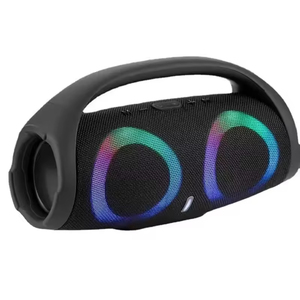
Engineered for high SPL performance, full CE/RoHS/FCC regulatory compliance, and dynamic visual lighting sync.
1. Executive Synthesis: The Evolution of CE Certified RGB Wireless Audio Solutions
The global portable audio equipment sector is undergoing a rapid technical convergence. Wireless acoustic delivery is no longer evaluated strictly on Total Harmonic Distortion (THD) or raw decibel output. Modern international distributors, consumer electronics brand owners, and channel importers require multifaceted audio architecture that combines European CE (Conformité Européenne) regulatory certification, dynamic multi-zone RGB light synthesis, advanced lithium-ion battery management, and ultra-reliable Bluetooth SoC (System-on-Chip) stability.
As a premier CE Certified RGB Bluetooth Speaker Factory & Supplier, our manufacturing methodology merges acoustic engineering with stringent international regulatory adherence. Obtaining genuine CE compliance under the Radio Equipment Directive (RED 2014/53/EU) requires extensive electromagnetic compatibility (EMC) testing, radio frequency (RF) spectrum verification, and low-voltage electrical safety compliance (LVD 2014/35/EU). This industry whitepaper outlines the structural technology, supply chain trends, acoustic architecture, and quality assurance protocols required by tier-1 global importers when sourcing high-volume Bluetooth audio systems.
Core Technical Advantage: All acoustic systems engineered in our manufacturing facility undergo full 3D Anechoic Chamber tuning and complete spectrum RF compliance checks to guarantee zero signal interference, true IPX7/IP67 ingress protection, and seamless RGB lighting dynamic synchronization.
2. Enterprise Manufacturing Capabilities & Acoustic Engineering Advantages
In alignment with established industry benchmarks—such as proprietary signal tuning platforms like XBass® low-frequency enhancement and adaptive RunStretch® power regulation—our manufacturing facility operates dedicated acoustic laboratories and SMT (Surface Mount Technology) assembly lines tailored for high-output audio hardware.
In-House DSP Acoustic Tuning
Utilizing high-performance 32-bit DSP audio processors to digitally calibrate frequency response curves, preventing cabinet resonance and maintaining sub-1% THD at maximum volume levels.
RunStretch® Power Optimization
Adaptive dynamic buck-boost circuit technology automatically regulates battery current under heavy low-frequency bass loads, extending playtime by up to 35% per charge cycle.
Strict CE & RED Laboratory Testing
Comprehensive in-house testing for EN 300 328 (2.4GHz RF spectrum), EN 301 489 (EMC immunity), and IEC/EN 62368-1 (Product Safety) to guarantee hassle-free EU customs clearance.
Technical Breakthrough: Audio-Reactive Multi-Zone RGB Lighting Protocol
Traditional RGB speakers often suffer from lighting lag, where visual pulses desynchronize from high-transient bass impacts. Our factory's engineering team solved this latency challenge by developing a hardware-level FFT (Fast Fourier Transform) sound-to-light spectrum driver chip integrated directly into the audio DSP board.
By extracting audio energy data across specific frequency bands (Sub-Bass: 20Hz-100Hz, Mid-Range: 500Hz-2kHz, Highs: 6kHz-16kHz), the onboard LED controller modulates addressable WS2812B/I2C micro-RGB arrays in real-time under 5ms latency. This delivers an immersive ambient visual experience that mirrors acoustic dynamics with pinpoint accuracy.
3. Technical Deep-Dive: CE Certification Standards for B2B Importers
For distributors and brand managers importing wireless audio devices into the European Economic Area (EEA), a standard self-declaration letter is legally insufficient. Legal enforcement agencies actively audit audio products for compliance with the mandatory directives listed below:
| Directive / Standard | Technical Scope & Test Objective | Compliance Guarantee |
|---|---|---|
| CE RED (2014/53/EU) | Radio Equipment Directive governing 2.4GHz Bluetooth transmitter output power, spectral efficiency, and receiver sensitivity. | EN 300 328 v2.2.2 Full Certification |
| EMC Directive (EN 301 489) | Electromagnetic Compatibility ensuring the device resists ambient RF interference and prevents radio noise emission. | Passed CISPR 32 / CISPR 35 Standards |
| LVD / Safety (EN 62368-1) | Audio/video, information, and communication technology equipment safety evaluation, thermal limits, and battery containment. | IEC 62368-1 Tested & Certified |
| RoHS 2.0 (2011/65/EU) | Restriction of Hazardous Substances (Lead, Cadmium, Mercury, Hexavalent Chromium, PBBs, PBDEs, and Phthalates). | 100% Environmentally Safe Assembly |
| UN38.3 & IEC 62133 | Lithium battery transport and thermal runaway safety validation for international sea and air freight. | MSDS & UN38.3 Test Reports Included |
4. Future Global Procurement Trends in Wireless Audio (2025–2030)
Enterprise procurement managers must align their 3-year hardware roadmaps with emerging wireless audio trends. Sourcing generic Bluetooth 5.0 hardware runs the risk of immediate product obsolescence. Our factory R&D division has identified four critical market trends driving B2B sales volume:
Trend 1: Migration to Bluetooth 5.4, LE Audio, and Auracast™ Broadcast
The adoption of the LC3 (Low Complexity Communication Codec) under Bluetooth 5.4 provides significantly superior sound quality at half the bitrate of legacy SBC codecs. Furthermore, Auracast™ broadcast audio allows a single transmitter (such as a TV, smartphone, or DJ console) to broadcast synchronized audio streams to an unlimited number of nearby RGB speakers, unlocking new commercial applications for outdoor venues, fitness centers, and large events.
Trend 2: Ruggedization & High Ingress Protection (IP67/IP68)
Consumer usage patterns have shifted dramatically toward outdoor activities, camping, maritime leisure, and tailgate events. Sourcing fully sealed IPX7 waterproof and dustproof enclosures with dual passive radiator bass systems ensures product longevity and drastically reduces post-sale warranty claims (RMA rate under 0.15%).
Trend 3: Smart App Integration & Custom EQ Profile Storage
Importers are moving away from fixed hardware EQ buttons. Modern procurement specs demand mobile companion apps (iOS & Android) that allow consumers to adjust 10-band graphic EQs, customize dynamic RGB lighting modes, update firmware over-the-air (OTA), and pair multiple units in True Wireless Stereo (TWS) or multi-party modes.
Trend 4: Sustainable CMF (Color, Material, Finish) Engineering
Environmental legislation in the EU and North America is incentivizing the use of Post-Consumer Recycled (PCR) plastics in speaker housings, alongside plastic-free retail packaging constructed from FSC-certified biodegradable fibers.
5. Product Development Trends: Architectural Breakdown of Modern RGB Audio
To deliver deep bass within compact physical dimensions, acoustic engineers must carefully balance internal air volume, passive radiator compliance, dynamic power headroom, and driver excursion. The diagram block below outlines the standard hardware layout utilized in our factory's flagship CE-certified RGB outdoor speaker line:
Engineered Speaker Chamber Architecture:
[Acoustic Driver Array] → [Dual Passive Bass Radiators] → [Sealed Acoustic Chamber] → [32-Bit Audio DSP + Class-D Amplifier Circuit] → [Isolated Lithium Battery Shield with BMS] → [RGB LED Light Diffusion Guide]
By electrically isolating the high-power Class-D amplifier board from the LED light driver IC, audio path signal-to-noise ratio (SNR) exceeds 88dB, preventing any high-frequency digital clock hum from bleeding into the acoustic transducers.
6. OEM/ODM Supply Chain & Manufacturing Quality Control Workflow
Partnering directly with an established original equipment manufacturer (OEM) and original design manufacturer (ODM) streamlines the product development lifecycle from initial 3D rendering to mass production shipments.
Phase 1: Industrial Design & Acoustic Simulation
Utilizing CAD modeling and Finite Element Analysis (FEA) acoustic simulation, our engineering team optimizes cabinet resonance, airflow dynamics, and structural rigidity before cutting physical steel tooling molds.
Phase 2: Tooling & Rapid Prototyping
Custom plastic injection molds are fabricated in-house. SLA 3D printing and CNC metal machining allow rapid turnarounds for working engineering samples within 14 business days.
Phase 3: SMT & Automated Assembly Line
Printed Circuit Board Assemblies (PCBAs) are produced on high-speed SMT lines featuring automated optical inspection (AOI) and X-ray solder testing to ensure zero manufacturing defects in high-density Bluetooth chipsets.
Phase 4: Comprehensive QA & Reliability Testing
Every batch undergoes grueling quality testing before factory release:
- Acoustic Sweep Testing: Automated AP (Audio Precision) testing to verify frequency response, sensitivity, and THD compliance.
- Thermal Shock & Aging: 48-hour continuous burn-in test under 45°C ambient temperature and 85% relative humidity.
- Drop & Vibration Validation: 1.5-meter drop testing onto hard concrete surfaces and 3-axis transport vibration simulation.
- Water Submersion Validation: 100% testing of IPX7 sealed units in pressurized water chambers.
7. Comprehensive B2B Procurement FAQ
Ready to Expand Your Wireless Audio Category?
Partner directly with a certified manufacturing leader. Contact our commercial engineering team today to receive factory wholesale pricing, detailed CE test reports, and custom OEM/ODM project quotes.
Contact Us