New launch: TRIBIT StormBox Max — turn music into moments.
0%

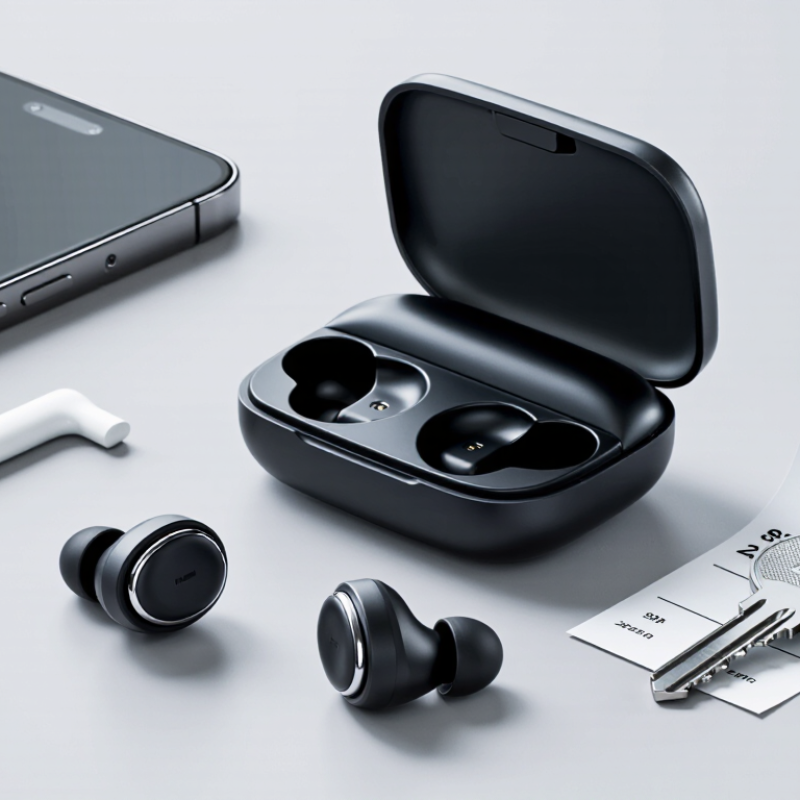
True Wireless Earbuds are small, battery-powered earphones with no cable connecting either bud to the other. Each earbud communicates wirelessly with your phone, while a compact case stores and recharges them. That case often fits in a pocket, beside a key or a folded receipt. Small details matter.

Unlike wireless earbuds joined by a neckband, True Wireless Earbuds leave both ears completely untethered. They can make commuting, walking, and taking calls feel less cluttered. But freedom has trade-offs: tiny batteries need regular charging, and a loose fit can spoil both comfort and sound. A feature list cannot tell you how a particular pair will feel after an hour.

Audio researcher Dr. Sean Olive’s headphone research offers a useful perspective. A careful paraphrase of its takeaway—not a verbatim quotation—is that listener preference matters when judging sound, not specifications alone. That is a good starting point for evaluating these earbuds. Fit, tuning, noise control, microphone quality, and battery life all shape the real experience. Yet no single model suits every ear or routine. Even an impressive review may miss your own fit problem. This guide explains how True Wireless Earbuds work, what their key features mean, and what to check before choosing a pair. Be curious, but a little skeptical.

What Are True Wireless Earbuds?

Defining True Wireless Earbuds: Two Earpieces, No Connecting Cable

What Are True Wireless Earbuds?

Defining True Wireless Earbuds: Two Earpieces, No Connecting Cable

True wireless earbuds are two separate listening devices. Each earpiece works without a cable linking it to the other. That small distinction matters. Traditional wireless earphones may still use a short neckband or connecting wire. True wireless models remove that physical connection completely.

In daily use, each earbud communicates with your phone and coordinates left and right audio. A charging case normally stores both pieces and replenishes their batteries. Sensors may pause playback when an earbud is removed. Microphones support calls, voice commands, and noise control, although performance depends on placement and software. From my experience testing cable-free earbuds, a stable fit affects sound more than many buyers expect. Loose tips can weaken bass and make outside noise seem louder.

There are practical trade-offs. Two independent batteries can drain unevenly, especially when one microphone handles more call work. Small touch controls may also misread a wet finger or winter glove. I have found this frustrating. Battery figures are usually measured under specific conditions, so real listening time may be shorter. Check fit, charging behavior, call clarity, and connection stability before judging the design. No connecting cable feels remarkably freeing, but it also removes a simple way to keep both earpieces together.

How Bluetooth Links Earbuds to a Phone and Coordinates the Pair

What Are True Wireless Earbuds?

How Bluetooth Links Earbuds to a Phone and Coordinates the Pair

True wireless earbuds have no cable between either side. Each small earpiece contains a Bluetooth radio, battery, microphone, and control chip. When you open the charging case, the earbuds enter a discovery mode. Your phone detects them, confirms the connection, and stores their pairing information.

The phone sends audio as digital packets through a Bluetooth connection. Depending on the design, one earbud may receive the main stream and relay part of it to the other. Newer systems can let both earbuds communicate with the phone more directly. Their internal clocks and buffers help keep left and right sound aligned. Even a tiny delay can make a voice sound strangely doubled.

Pairing also involves authentication and encryption. These steps help prevent nearby devices from joining accidentally. The earbuds then negotiate audio settings, microphone access, and control functions. A codec compresses the music before transmission and rebuilds it inside each earbud. Wireless traffic can still become unstable near crowded routers, metal barriers, or busy stations.

I have noticed that a weak battery can affect one side first. That detail is easy to overlook. A charging case also acts as a reset point when the earbuds lose coordination. The system is clever, but not perfect. Sometimes removing both earbuds and pairing again solves a problem that software explanations cannot clearly identify.

How Bluetooth LE Audio’s LC3 Codec Uses 7.5- or 10-ms Frames

In Bluetooth LE Audio, LC3 does not encode an endless waveform all at once. It processes audio in short frames, commonly 7.5 or 10 milliseconds long. At a 48-kHz sample rate, that means 360 or 480 samples per channel in each frame. Those small blocks are packaged for transmission, then decoded and assembled by the receiving earbud. Small units, repeated constantly.

Frame duration affects timing, but it is not the whole latency story. With 7.5-ms frames, a block fills sooner, but processing and packet events occur more often. A 10-ms frame holds more samples, which may simplify scheduling, though it can add waiting time. Real delay also depends on buffering, radio scheduling, and the playback pipeline. Sound quality depends on bitrate and implementation, not frame length alone. That distinction matters. A shorter setting may feel snappier in a test, yet crowded wireless conditions can change the result.

Reading Battery Life, Charging-Case Capacity, and Bluetooth Specifications

What Are True Wireless Earbuds?

Battery-life figures usually describe one listening session, not a full day. A pair rated for eight hours may last less with noise cancellation enabled, high volume, or frequent calls. Compare figures under similar conditions, and treat manufacturer estimates as guides rather than guarantees. Check the small print.

The charging case adds extra listening time, but its capacity in milliamp-hours does not translate directly into earbud hours. Energy is lost during charging, and the case may reserve power to protect its battery. A case claiming several recharges can be useful for travel, yet real results depend on how often you use each earbud and how much charge remains when you put them away. I find case math surprisingly easy to misread.

Bluetooth specifications need similar care. A newer version can improve efficiency or connection features, but it does not automatically mean better sound or longer range. Audio quality also depends on supported codecs, the connected phone, and the listening environment. Walls, crowded transit, and a phone tucked deep in a bag can interrupt a connection. Look for clear details about codecs and multipoint support, if those features matter to you. Specification tables rarely show the whole experience. My own habits are inconsistent, so even careful comparisons leave some uncertainty.

What Are True Wireless Earbuds? — Reading Battery Life, Charging-Case Capacity, and Bluetooth Specifications
Specification What the figure means How to read it Important context
True wireless design Each earbud operates without a cable connecting it to the other earbud or to the audio source. The left and right earbuds communicate wirelessly and usually connect to a phone, tablet, or computer over Bluetooth. “True wireless” describes the design; it does not specify sound quality, battery life, or Bluetooth features.
Earbud battery life The stated listening time for the earbuds on one charge, usually measured in hours. Check whether the figure applies with features such as active noise cancellation enabled, and whether it refers to continuous playback. Actual runtime varies with volume, audio content, wireless connection, temperature, battery age, and enabled features. There is no single standard runtime for all earbuds.
Charging-case capacity The electrical charge the case battery can store, commonly expressed in milliamp-hours (mAh). A larger mAh figure generally indicates more stored charge, but it does not directly state how many full earbud recharges the case will provide. Conversion losses, battery voltage, charging limits, and power used by the case affect the usable amount. Compare recharge claims only when their test conditions are clear.
mAh and energy mAh measures electric charge; watt-hours (Wh) measure energy and account for voltage. Use: Wh = mAh × V ÷ 1,000. For example, a hypothetical 50 mAh cell at a nominal 3.7 V stores 0.185 Wh. The example is a unit conversion, not a measurement of a particular earbud. Comparing mAh alone can be misleading if battery voltages differ.
Recharge estimate A rough estimate of how many times a case might recharge the earbuds. For example, a hypothetical 500 mAh case and two 50 mAh earbuds would have a simple charge-based ratio of 500 ÷ 100 = 5. This is not a guaranteed five full recharges: the calculation ignores conversion losses, reserve capacity, and charging-system behavior. Real results are lower and model-dependent.
Bluetooth version The Bluetooth Core Specification version supported by a device, such as 5.2, 5.3, or 5.4. Read the version as a protocol specification, not as a direct measure of sound quality or wireless range. A version number alone does not guarantee a particular codec, multipoint connection, low-energy audio, or other optional feature. Check the supported profiles and features.
Bluetooth audio and LE Audio Bluetooth audio may use Bluetooth Classic audio profiles; LE Audio is a separate Bluetooth audio system based on Bluetooth Low Energy. Look for explicit support for LE Audio and compatible audio codecs, rather than inferring support from the Bluetooth version alone. LE Audio support depends on compatible hardware, software, and supported features at both ends of the connection.
Bluetooth frequency band Bluetooth operates in the 2.4 GHz ISM band. This is the radio frequency range used to transmit data between the earbuds and the connected device. Other nearby wireless devices can also use the 2.4 GHz band, so interference and the surrounding environment may affect connection performance.
Charging connector The physical port used to recharge the case, commonly USB-C on current devices. Check the product documentation for supported charging methods and input requirements. A USB-C connector does not by itself guarantee USB Power Delivery support or a particular charging speed.

What an IPX4 Rating Means for Earbud Splash Resistance

What Are True Wireless Earbuds?

What an IPX4 Rating Means for Earbud Splash Resistance

True wireless earbuds work without a cable connecting the left and right earpieces. Their compact design also leaves little room for water protection, so the IP rating matters during everyday use. IPX4 is a splash-resistance rating, not a promise that earbuds can be submerged.

IEC 60529, the standard for enclosure protection ratings, defines level 4 as protection against splashing water from any direction. In its spray-nozzle test, water flows at 10 litres per minute, with exposure lasting at least five minutes; duration can depend on enclosure size. The “X” means no dust-protection rating is stated. A wet commute or a few drops from a workout may be within the rating’s scope. A shower is a different risk.

Small detail, big difference. IPX4 does not measure protection from soap, salt, or long exposure to sweat. Nor does an earbud rating automatically cover its charging case; check each item separately. Dry the earbuds before charging, and avoid treating a laboratory rating as a guarantee in every real-world situation. Moisture can still find a worn seal. That’s easy to overlook.

FAQS

What does the LC3 codec do with audio?

It divides audio into short frames instead of processing one endless waveform. Each frame is transmitted and rebuilt by the receiving earbud.

How many samples are in a 7.5-millisecond frame?

At a 48-kilohertz sample rate, one 7.5-millisecond frame contains 360 samples per channel. Small blocks repeat continuously.

Is a shorter frame always better for latency?

No. A 7.5-millisecond frame fills sooner, but processing and packet events happen more often. Buffering and radio scheduling also matter.

What is the difference between 7.5- and 10-millisecond frames?

A 10-millisecond frame contains more samples and may simplify scheduling. However, it can add waiting time before transmission.

Does frame length determine sound quality?

Not by itself. Bitrate, software implementation, and the listening environment strongly affect sound quality. The shorter option is not automatically clearer.

What do wireless earbud battery ratings usually mean?

They usually describe one listening session under specific conditions. Noise cancellation, high volume, and calls can reduce the actual time.

Does charging-case capacity directly show extra listening hours?

No. Charging loses energy, and the case may reserve power for battery protection. Remaining charge also changes the real result.

Does a newer wireless specification guarantee better sound or range?

No. Newer specifications may improve efficiency or connection features. Codec support, the phone, walls, and crowded transit still affect performance.

What details should I check before comparing earbuds?

Compare battery tests under similar conditions. Check supported codecs, multipoint support, frame settings, and charging behavior. Specification tables miss some real-world details.

Conclusion

True Wireless Earbuds are a pair of separate earpieces with no cable connecting them to each other or to the listening device. Bluetooth connects them to a phone and coordinates audio playback between the two sides, allowing them to function as a single listening system. With Bluetooth LE Audio, the LC3 codec can process sound in short frames of 7.5 or 10 milliseconds, helping manage audio transmission while balancing sound quality and power use.

When comparing earbuds, look beyond a single battery-life figure: playback time depends on the earpieces, while the charging case provides additional recharges. Case capacity and Bluetooth specifications can help clarify what to expect, though actual performance varies with usage and settings. An IPX4 rating indicates resistance to splashes from any direction, making the earbuds suitable for light exposure to water, but it does not mean they are waterproof or designed for submersion.

Alice

Alice

Alice is a dedicated marketing professional with a strong understanding of the company’s products, customers, and industry trends. Through a combination of market research, strategic planning, and clear communication, she helps present the company’s solutions in a practical and engaging way. Her......