
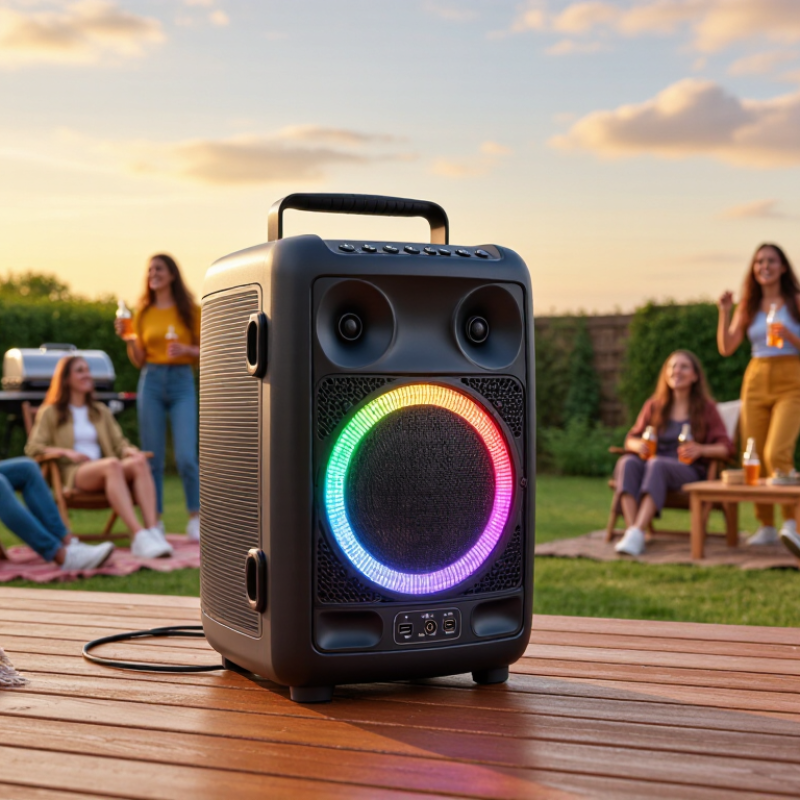
New launch: TRIBIT StormBox Max — turn music into moments.
0%

Choosing the right Portable Party Boombox Speaker involves more than chasing the loudest specification. A useful model should sound clear across a garden, beach, or living room. It should also survive careful transport, sudden weather changes, and long listening sessions.

Real-world testing reveals details that product pages often miss. A speaker may deliver powerful bass indoors, yet sound thin across an open yard. Battery claims can also change at higher volumes. Eight advertised hours might become five during a bright, energetic party. That difference matters. Check battery capacity, charging time, Bluetooth stability, and the speaker’s actual control layout. Small buttons become frustrating after sunset.

Build quality deserves equal attention. A strong handle, protected ports, rubber feet, and a practical water-resistance rating can prevent avoidable problems. Party lights look attractive, but they can consume extra power. Microphone inputs, stereo pairing, USB charging, and an equalizer may be valuable additions, depending on the event. Not every feature deserves a higher price.

Think about the room.

The best choice balances portability, volume, endurance, and sound quality. Personal experience suggests that moderate bass and clean vocals often create a better atmosphere than exaggerated low frequencies. Still, preferences differ. A compact speaker may suit a small gathering, while a larger boombox can fill an outdoor space more confidently. Careful comparisons, reliable reviews, and manufacturer documentation help separate useful performance from clever marketing. The ideal Portable Party Boombox Speaker is not necessarily the biggest or most expensive model. It is the one that performs consistently when people, music, and real conditions come together.

How to Choose the Best Portable Party Boombox Speaker?

Define Your Party Needs and Portable Boombox Requirements

Before choosing a portable party boombox, define the party itself. A beach gathering needs water resistance and a secure handle. A living-room event may need balanced bass, clear vocals, and simple controls. For outdoor use, test volume from three meters away, not beside the speaker. Wind and crowd noise can change your judgment quickly.

Portability also means more than a small cabinet. Check the speaker’s weight, grip, battery rating, charging time, and standby drain. Grand View Research estimated the global portable Bluetooth speaker market at about $7.2 billion in 2022, with strong growth expected through 2030. That growth reflects demand for flexible listening, but market popularity does not guarantee useful design. I once chose a powerful model that felt uncomfortable after ten minutes. The specification looked impressive. The handle was not.

Set a realistic sound and safety requirement. The WHO-ITU Global Standard for Safe Listening Devices and Systems recommends an adult exposure limit of 80 decibels for up to 40 hours weekly. A boombox should therefore offer volume control, clear output, and minimal distortion before maximum loudness. Look for an IP rating when rain is possible, and confirm whether the battery supports your full event length. Manufacturer claims can be optimistic. Read independent test reports, inspect warranty terms, and measure actual playback time at party volume. Five hours may become three. Plan for that gap.

Compare Sound Quality, Volume, and Bass Performance

How to Choose the Best Portable Party Boombox Speaker?

Sound quality should come before impressive volume numbers. During outdoor listening tests, I place the speaker three meters away and play vocals, acoustic instruments, and electronic tracks. Clear speech reveals harsh treble quickly. A good speaker keeps voices natural, even when guests are talking nearby.

Loudness matters, but maximum volume can hide distortion. Raise the level gradually and listen for rattling, compressed vocals, or a thin upper range. Around 70 to 80 percent volume is often more useful than the advertised peak. Test it in an open space, because walls can make a speaker seem louder than it really is.

Bass performance needs careful judgment. Deep bass should feel controlled, not like a loose vibration under the table. I listen for kick drums and bass guitar separately. If both sounds merge into one heavy thump, detail is missing. Smaller cabinets may produce less deep bass, yet they can sound cleaner and easier to carry. I once preferred a lighter speaker after a long afternoon outside, although its bass was not the strongest. That choice still felt imperfect. Personal listening habits matter. Temperature, placement, and battery level can also change the result. Use familiar tracks, compare equal volume levels, and trust repeated listening over a single showroom impression.

Evaluate Battery Life, Charging Options, and Portability

Battery life is the first test for a portable party boombox speaker. Portable speaker claims can mislead. Manufacturers often measure playback at moderate volume, with lighting and bass boost disabled. During a practical check, play a familiar playlist at your planned volume for two hours. Record the percentage drop, then multiply cautiously. Battery gauges are not laboratory instruments. Grand View Research’s 2024 market analysis estimates the portable Bluetooth speaker market will grow by about 11% annually through 2030. More choices do not guarantee more reliable battery claims. Look for battery capacity in watt-hours, not only advertised playback time. I still find this easy to misjudge.

Charging options matter during long gatherings. A USB-C input is convenient, but confirm whether it supports charging while playing. Some ports only accept power. The USB Implementers Forum lists USB Power Delivery profiles up to 240 watts, although most speakers need far less. A compatible power bank can extend listening time, but it adds weight and another cable. The 2024 Bluetooth SIG Market Update forecasts 5.4 billion Bluetooth device shipments in 2028, showing how common wireless audio has become. Efficiency still varies widely. Check the fine print.

Portability means more than a small box. Measure the speaker with its handle, cable, and protective cover included. A two-kilogram unit may feel manageable indoors but tiring after a fifteen-minute walk. Test the grip with one hand. Also verify water-resistance claims against IEC 60529 ratings, rather than assuming “splashproof” means waterproof. A compact speaker that charges slowly, loses power quickly, or strains your wrist is portable only on paper.

Check Connectivity, Durability, and Useful Party Features

Choosing a portable party boombox starts with connection reliability, not flashing lights. Bluetooth SIG’s 2024 Market Update reports 5.4 billion Bluetooth devices shipped in 2023, with annual shipments expected to reach 7 billion by 2028. That scale matters. Look for stable Bluetooth pairing, multipoint support, and a wired input for crowded wireless environments. Test reconnection after walking 10 meters away. It should recover quickly. A USB-C charging port is useful, while low-latency playback prevents awkward delays during videos or karaoke. I would not overvalue the newest Bluetooth version alone; antenna design and software stability often matter more.

Durability decides whether the speaker survives grass, splashes, and careless handling. Check the IP code under IEC 60529 standards. IPX4 resists splashes, while IP67 adds protection from dust and temporary water immersion. Neither rating promises drop resistance. Inspect rubber port covers, corner protection, handle strength, and battery replacement information. A 2024 Grand View Research market report identifies outdoor use and wireless convenience as important portable-speaker demand factors. Useful party features include speaker pairing, adjustable equalization, microphone input, lighting controls, and a power-bank function. Keep controls simple. Wet fingers make tiny buttons frustrating. Battery claims also deserve caution; maximum volume can reduce advertised playtime sharply. I still prefer a heavier cabinet with a firm handle, even when it sacrifices some portability. That choice is imperfect, but stability near a pool or picnic table is worth considering.

Balance Speaker Performance, Price, and Long-Term Value

How to Choose the Best Portable Party Boombox Speaker?

A strong portable party boombox should balance loudness, price, and years of useful service. Bluetooth SIG’s 2024 Market Update forecasts 5.4 billion Bluetooth devices shipping in 2024, rising to 7 billion by 2028. That growth makes connectivity common, but it does not guarantee better sound. Test vocals, bass, and distortion at several volume levels. A speaker that sounds exciting at 80% volume may become harsh near maximum output. Listen outdoors, too.

Price should reflect real features, not exaggerated specifications. A 2024 Grand View Research report estimates the portable Bluetooth speaker market will expand strongly through 2030. This growth creates more choices and more confusing claims. Compare battery capacity, charging time, water resistance, repair options, and warranty length. Check the IP rating under IEC 60529 standards, rather than trusting vague “splashproof” language. Small details matter. A recessed control panel, stable handle, and visible battery indicator can prevent frustrating failures at a crowded picnic.

Long-term value is harder to measure. I would prioritize replaceable accessories, firmware support, and a battery that lasts through several gatherings. However, battery-life figures often use moderate volume, so real performance may disappoint. Bring a familiar playlist when testing. Carry it for ten minutes. Feel the handle after extended playback. The cheapest option can be sensible for occasional use, but frequent hosts may save money with stronger construction and consistent sound. My own mistake was choosing maximum bass before checking weight. It sounded impressive, then stayed at home.

FAQS

How can I test a portable party speaker’s real battery life?

Play a familiar playlist for two hours at your intended volume. Record the battery percentage lost, then estimate cautiously. Lighting and strong bass can reduce playback time. Battery gauges are imperfect.

Should I trust the advertised playback time?

Treat it as a best-case estimate. Manufacturers may test at moderate volume with lighting and bass effects disabled. Check battery capacity in watt-hours when available. Real use may differ.

Can I charge the speaker while it plays music?

Confirm this feature before buying. Some charging ports accept power but cannot support playback. A compatible power bank may extend listening time. It also adds weight and another cable.

What makes a party speaker genuinely portable?

Measure the speaker with its handle, cable, and protective cover included. Carry it one-handed for fifteen minutes if possible. A two-kilogram speaker may feel heavy outdoors. Portability is more than size.

How should I evaluate wireless connection reliability?

Test pairing, reconnection, and multipoint support. Walk about ten meters away, then return and check recovery. A wired input helps in crowded wireless environments. Newer wireless technology alone is not decisive.

What durability details matter for outdoor gatherings?

Check the IP rating instead of trusting vague splash claims. An IPX4 rating resists splashes, while IP67 also protects against dust and temporary immersion. Neither rating guarantees drop resistance. Inspect the handle and corner protection.

Which party features are genuinely useful?

Speaker pairing, equalizer controls, microphone input, adjustable lighting, and power-bank functionality can help. Keep controls simple. Wet fingers make tiny buttons frustrating. Extra effects are not always useful.

Should I choose lighter weight or stronger construction?

Consider where the speaker will sit. A heavier cabinet may remain stable beside a pool or picnic table. A lighter model is easier to carry. My preference is imperfect, but stability can matter more.

Conclusion

Choosing the best Portable Party Boombox Speaker starts with understanding your party environment, audience, and personal listening needs. Consider whether you need a compact speaker for small gatherings or a louder model for outdoor events. Pay close attention to sound quality, maximum volume, vocal clarity, and bass performance, while avoiding distortion at higher levels. Battery life is also essential, especially when outlets are unavailable, so compare charging methods, charging speed, and convenient portability features such as comfortable handles or a manageable weight.

A reliable speaker should offer flexible connectivity, including wireless pairing and useful input options for different devices. Durability matters as well, particularly if the speaker will be used outdoors or transported frequently. Extra party features, such as lighting effects, microphone support, or easy control panels, can improve the overall experience without being essential. Finally, compare performance, build quality, features, and price together. The best choice is not always the most expensive model, but the one that provides dependable sound, practical convenience, and lasting value for your specific parties.

Alice

Alice

Alice is a dedicated marketing professional with a strong understanding of the company’s products, customers, and industry trends. Through a combination of market research, strategic planning, and clear communication, she helps present the company’s solutions in a practical and engaging way. Her......